Facial Analysis Machine technology is reshaping how clinics, salons, and beauty retailers evaluate skin condition. Modern systems capture high-resolution facial images, then estimate concerns such as wrinkles, pigmentation, pores, redness, and hydration. The experience feels simple: a client sits under controlled lighting while the device records several angles within seconds.
Market reports show strong momentum. Grand View Research valued the global facial recognition market at USD 5.71 billion in 2021 and projected continued expansion through 2030. MarketsandMarkets also forecasts rapid growth in AI-based computer vision applications. These figures do not measure beauty analysis machines directly. They indicate the broader infrastructure supporting image-based assessment.
Accuracy still needs careful interpretation. NIST computer scientist Patrick Grother has emphasized, “There is no single number for accuracy.” That warning matters for global buyers. A machine tested on one skin-tone range, camera setup, or age group may perform differently elsewhere. Real purchasing decisions should examine validation methods, lighting controls, data security, software updates, and after-sales training.
Look beyond impressive screens.
The best Facial Analysis Machine should produce consistent images, understandable reports, and practical treatment references. It should also support informed professional judgment, rather than replace it. Some product claims remain difficult to verify, especially when suppliers publish no independent testing. That is an uncomfortable limitation, but it deserves attention.
This guide compares leading systems for international buyers. It considers measurement depth, workflow, usability, compliance readiness, and total ownership cost. The goal is not to crown one universal winner. Different clinics need different tools.
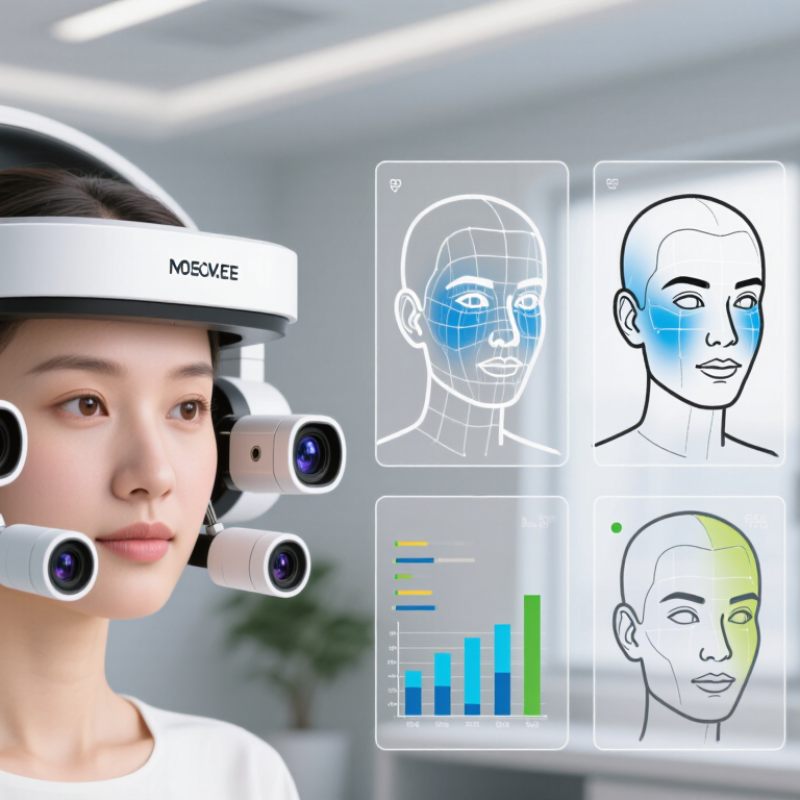
Facial analysis machines measure visible and near-visible skin conditions. Common readings include hydration, oil, pore appearance, wrinkles, pigmentation, redness, and texture. Some systems also estimate sensitivity risks from uneven tone or barrier-related dryness. A 2024 report by Grand View Research identifies rising demand for personalized skincare devices, supported by consumers seeking measurable treatment guidance. These machines usually combine controlled lighting, high-resolution cameras, polarized filters, and image-processing software. The device captures several facial images. Its algorithm then compares patterns against reference datasets. Results may appear as color maps, scores, or age-related estimates.
Briefly, it turns skin into data.
Accuracy depends on calibration, room lighting, camera distance, and skin preparation. A face covered with sunscreen can produce different readings from freshly cleansed skin. Darker environments may also distort color analysis. The European Commission’s 2023 report on artificial intelligence stresses the importance of reliable data, human oversight, and transparent system limits.
That matters here. An experienced consultant should confirm machine findings through direct observation and customer history. The result is guidance, not a medical diagnosis. Even hydration scores are relative. They can shift during the day. Buyers should request independent test results, repeatability data, privacy controls, and clear explanations of scoring methods. Some claims still need stronger evidence. That is worth questioning.
Top Facial Analysis Machines for Global Buyers
Modern facial analysis systems combine several imaging technologies rather than relying on one camera. High-resolution RGB imaging records visible concerns such as uneven tone, redness, and surface texture. Multispectral imaging examines light responses beneath the visible surface. This can help estimate pigmentation patterns and vascular changes. Results depend on controlled lighting. Small shadows can distort readings.
Three-dimensional depth sensors map facial contours with structured light or infrared technology. They measure pores, wrinkles, facial volume, and symmetry from different angles. Polarized light can reduce surface glare and reveal details that ordinary photography may miss. Advanced systems then use artificial intelligence to compare images, identify patterns, and generate measurable reports. The software should show how each result was produced, not only display a score.
Reliable machines need regular calibration, stable positioning, and clean imaging surfaces. In practical use, a technician should capture the face without heavy makeup, harsh sunlight, or changing camera distance. Local processing may improve data control, while encrypted storage supports safer international operations. No system is flawless. Skin tone, age, hydration, and regional lighting conditions can influence accuracy. Independent testing matters. Buyers should request validation data, training records, and clear limitations before purchasing. A polished interface is useful, but trustworthy measurements matter more.
Facial landmark density is a practical indicator of analysis detail. Sparse 68-point tracking supports basic facial geometry, dense 468-point mesh tracking enables more detailed face-shape and expression analysis, while 478-point iris-enabled tracking adds eye-region detail for applications such as gaze estimation and eye measurement.
Top Facial Analysis Machines for Global Buyers
Clinics need more than attractive images. Polarized-light systems reveal surface texture, redness, and pore visibility under controlled lighting. Multispectral or ultraviolet imaging can highlight pigmentation patterns and product distribution. Three-dimensional scanners add facial depth, useful for treatment planning and progress comparisons. The International Society of Aesthetic Plastic Surgery reported 34.9 million surgical and nonsurgical procedures worldwide in 2022. That demand increases the value of repeatable measurements, not just visual impressions. Still, a machine score is not a diagnosis.
Salons often benefit from compact cameras with hydration, oil, and texture sensors. These systems support consultations, but operators must explain their limits clearly. Research facilities usually require standardized lighting, calibration records, exportable data, and stable software settings. The International Organization for Standardization stresses controlled conditions for reliable measurement. A small change in room lighting can alter an image. This is easy to underestimate. Buyers should also check skin-tone performance across diverse test groups, because accuracy may vary.
Tips: Ask for validation data, calibration procedures, and sample reports before purchasing. Test the same volunteer twice, minutes apart. Large differences signal weak repeatability. Train staff to capture identical angles and distances. Keep consent and data security procedures documented. No device is perfect, and even experienced teams should question unusually dramatic results.
Top Facial Analysis Machines for Global Buyers
How Global Buyers Can Compare Features, Accuracy, and Usability
Global buyers should compare facial analysis machines by testing real workflow conditions, not attractive specifications alone. Check image resolution, lighting tolerance, skin assessment categories, and report clarity. A machine may perform well in a showroom but struggle with darker rooms, reflective skin, or uneven positioning. Accuracy claims should include testing methods, sample sizes, and environmental limits. Without this evidence, “high accuracy” remains difficult to verify.
Usability matters every day. Look for guided positioning, fast capture, multilingual interfaces, and simple data export. Staff should understand the results without advanced technical training. Examine the screen closely. Are labels clear? Can users repeat a scan easily? A reliable device should also protect personal data through controlled access and secure storage. Local privacy requirements may differ, so buyers should confirm compliance before deployment. This step is often overlooked.
Tips: Request a live demonstration with different skin tones and lighting conditions. Compare repeated scans for consistency, not just visual appeal. Ask how software updates, calibration, maintenance, and technical support are handled. Test the reporting process from scan to consultation. Small delays become frustrating during busy hours. Also, leave room for uncertainty; facial analysis can support professional judgment, but it should not replace careful observation or qualified advice.
| Machine Type | Primary Imaging Technology | Main Analysis Areas | Typical Capture Time | Accuracy Considerations | Usability Level | Recommended Operating Environment | Key Buyer Checks |
|---|---|---|---|---|---|---|---|
| Standardized RGB Facial Analyzer | High-resolution visible-light photography, usually with controlled LED illumination | Wrinkles, visible pores, redness, blemishes, pigmentation appearance, skin texture | Approximately 1–5 seconds per capture | Good repeatability when lighting, facial position, expression, and distance are standardized. Results are generally comparative rather than a medical diagnosis. | High; commonly suitable for retail consultations and routine follow-up | Beauty stores, aesthetic clinics, dermatology support areas, and consultation rooms | Check camera resolution, lighting consistency, face-position guidance, report customization, and multilingual software support. |
| Polarized-Light Skin Analyzer | Cross-polarized and parallel-polarized visible-light imaging to reduce surface glare and emphasize subsurface visual contrast | Redness patterns, uneven tone, vascular-looking areas, surface texture, pigmentation appearance | Approximately 2–8 seconds per capture | Polarization can improve image consistency and reduce reflections, but results remain affected by skin moisture, cosmetics, ambient light, and positioning. | High for trained operators; moderate for first-time users | Professional consultation rooms with controlled lighting | Confirm the illumination modes, glare-control method, operator instructions, repeat-capture process, and data export options. |
| Multispectral Facial Analyzer | Multiple controlled wavelength bands, commonly including visible and near-infrared ranges | Pigmentation appearance, redness-related patterns, oil-related contrast, texture, and selected subsurface features | Approximately 5–20 seconds per capture | Additional spectral information can improve feature separation, but accuracy depends on wavelength calibration, algorithms, skin tone diversity, and validation quality. | Moderate to high; staff training is recommended | Aesthetic clinics, research-oriented practices, and premium skin-care consultations | Request wavelength specifications, calibration procedures, validation data across skin tones, software update policy, and regulatory documentation. |
| UV-Enhanced Facial Imaging System | Ultraviolet or near-ultraviolet excitation combined with visible-light imaging; UV exposure must be controlled | Surface fluorescence patterns, selected pigmentation-related contrast, oil-related fluorescence, and photo-damage indicators | Approximately 3–15 seconds per capture | Fluorescence signals vary with cosmetics, skin products, hydration, and camera settings. UV-derived images should not be treated as a definitive clinical diagnosis. | Moderate; requires clear safety instructions and operator training | Controlled professional environments with documented operating procedures | Verify exposure limits, shielding, safety certification, wavelength details, cleaning procedures, and suitability for the intended users. |
| 3D Facial Surface Scanner | Structured light, stereoscopic imaging, or depth-sensing cameras for three-dimensional facial mapping | Facial symmetry, contours, volume changes, skin-surface topography, and treatment-progress mapping | Approximately 2–30 seconds per scan | Geometric accuracy depends on calibration, head movement, hair, facial expression, scan distance, and the depth-sensing technology used. | Moderate; guided positioning is important | Aesthetic clinics, cosmetic consultation centers, and treatment-planning environments | Ask for stated spatial accuracy, scan-to-scan repeatability, reference-marker requirements, file formats, and privacy controls for 3D facial data. |
| Handheld Smartphone-Based Analyzer | Mobile-device camera imaging supported by software-based image analysis | Visible blemishes, apparent redness, pore visibility, texture, and routine progress photographs | Approximately 5–30 seconds per capture | Convenient but more sensitive to ambient light, camera model, focus, angle, distance, makeup, and user technique than enclosed systems. | Very high; minimal setup and easy staff onboarding | Retail counters, mobile consultations, home-care programs, and multi-location sales teams | Check supported operating systems, device compatibility, image-standardization guidance, offline functionality, cloud hosting location, and subscription terms. |
Selecting a facial analysis machine requires more than comparing image quality or software features. Importers should verify the product classification, customs documents, electrical specifications, and language requirements before placing an order. A machine designed for one voltage standard may need an approved adapter or a different power configuration. Small details matter. Ask for invoices, manuals, packing lists, and conformity records early.
Compliance also includes data handling. Facial images may be sensitive personal information in some markets. Buyers should confirm where images are stored, who can access them, and whether cloud functions can be disabled. Local privacy specialists can review consent forms and retention settings. Do not assume that a supplier’s general statement covers every country. Regulations change, and older documents may no longer be sufficient.
After-sales support can determine the real cost of ownership. Request installation guidance, operator training, calibration procedures, spare-part availability, and response times in writing. A clear warranty should explain shipping responsibilities, software updates, exclusions, and repair limits. Keep records. Ask whether remote diagnostics require data access.
Some suppliers offer impressive demonstrations but weak support after delivery. That risk deserves attention. A practical evaluation may include a sample report, a test unit, and a trial with different skin tones and lighting conditions. No machine performs perfectly in every environment, so buyers should document limitations before making claims to customers.
Copyright © 2021 United Orthopedic Corporation All Rights Reserved.
Necessary cookies are absolutely essential for the website to function properly. This category only includes cookies that ensures basic functionalities and security features of the website. These cookies do not store any personal information.
Any cookies that may not be particularly necessary for the website to function and is used specifically to collect user personal data via analytics, ads, other embedded contents are termed as non-necessary cookies. It is mandatory to procure user consent prior to running these cookies on your website.