
Choosing a dependable printed circuit board assembly partner can shape a product’s cost, reliability, and launch schedule. A strong supplier does more than place components on a board. It controls material sourcing, solder quality, inspection, documentation, and delivery risks.
This guide reviews ten established companies using practical criteria. These include engineering support, prototype capability, production scale, quality systems, and industry experience. We also consider traceability, automated optical inspection, X-ray testing, and responsiveness when designs change. A factory floor tells part of the story. Clear communication often reveals the rest.
No shortlist is flawless. A provider that suits medical equipment may not fit a fast-moving consumer device. Regional coverage, minimum order quantities, certification needs, and budget can change the decision. Readers should verify current capabilities directly with each company. Ask for recent quality data, sample reports, process controls, and realistic lead times. A polished website is not enough.
The companies discussed here represent different strengths rather than identical business models. Some focus on prototypes and low-volume production. Others support complex assemblies, global supply chains, or high-volume manufacturing. Their rankings should be treated as a starting point, not a final verdict. The best choice depends on your board design, risk tolerance, and production goals. Small details matter, such as labeled feeder racks, clean inspection records, and fast answers from an applications engineer. Those details can prevent expensive rework later.
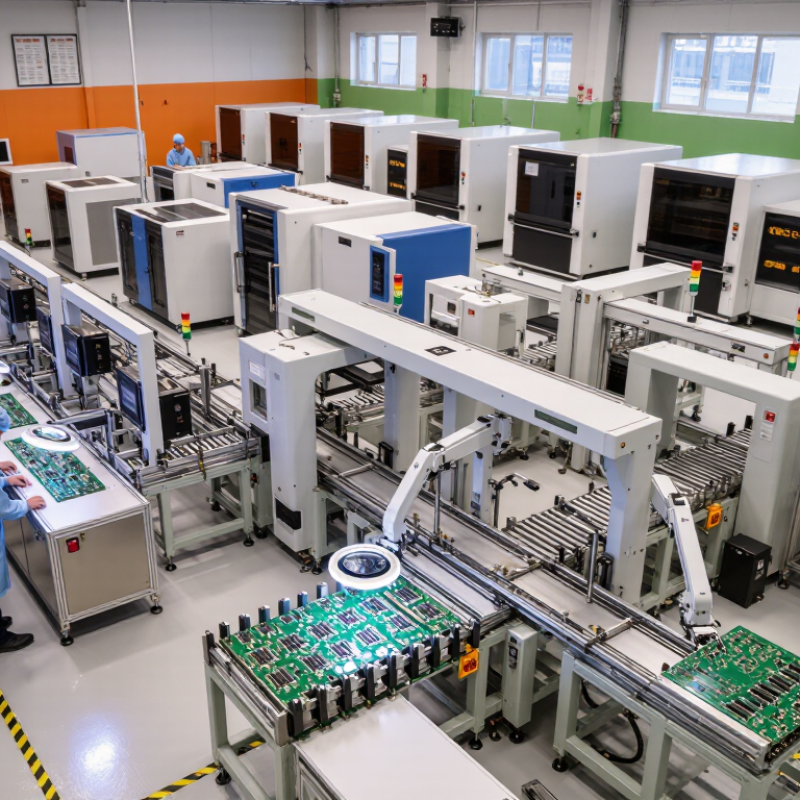
Printed circuit board assembly companies turn bare circuit boards into working electronic assemblies. Their work includes component sourcing, solder paste printing, automated placement, reflow soldering, and inspection. Skilled teams also handle through-hole parts, wire connections, and final assembly when required.
Quality control is central to their role. Technicians may use automated optical inspection, X-ray inspection, and functional testing to identify missing parts, solder bridges, or weak joints. A reliable company reviews Gerber files, bills of materials, assembly drawings, and component tolerances before production. It should also trace batches and record inspection results. Small details matter. A misplaced capacitor can stop an entire product from working.
Tips: Ask how a company manages component shortages, obsolete parts, and engineering changes. Request sample inspection reports and confirm its testing capabilities. Discuss moisture-sensitive components and packaging requirements early. A clear communication process prevents expensive rework.
Production schedules can look impressive on paper. Reality is less tidy. A design may pass review but fail during its first physical build. For that reason, experienced assembly partners use prototype runs, document defects, and adjust placement or solder profiles carefully. They should explain problems openly, rather than hide them behind delivery promises. Cost matters, but dependable records, trained operators, and repeatable processes often matter more. Even experienced teams can miss something. That is why independent testing remains valuable.
10 Best Printed Circuit Board Assembly Companies?
Key Criteria for Evaluating PCB Assembly Providers
Choosing among the 10 best printed circuit board assembly companies requires more than comparing hourly rates. Start with process control. Verify certifications, inspection methods, component traceability, and documented corrective actions. IPC standards offer a practical quality benchmark. Ask to see sample inspection records, not polished presentations. Small details matter.
Deloitte’s 2024 Smart Manufacturing and Operations Survey found that 65% of manufacturers were investing in smart manufacturing initiatives. This supports evaluating digital production records, automated optical inspection, and real-time defect tracking. Still, automation alone proves little. A fast line can repeat mistakes faster. Request first-pass yield, defect-per-million data, and rework rates for products similar to yours. These figures should cover recent production, not only pilot runs.
Supply resilience also deserves close attention. The 2024 electronics manufacturing outlook from a global industry trade association identified material costs, talent shortages, and demand volatility as continuing pressures. Review approved-vendor controls, alternate component procedures, and factory capacity during peak periods. Confirm how engineering changes are released and archived. Ask who owns the decision when a substitute component appears. That answer may reveal more than a sales brochure. Past performance is useful, but it can become outdated quickly. Include a trial order, independent testing, and clear acceptance criteria before making a long-term commitment.
10 Best Printed Circuit Board Assembly Companies?
Ten Leading Printed Circuit Board Assembly Companies
Choosing among ten leading printed circuit board assembly companies requires more than comparing hourly rates. Strong suppliers combine engineering support, stable production, and clear communication. Their teams review component availability, soldering risks, board spacing, and expected production volume before quoting. That early review can prevent expensive redesigns later.
A reliable assembly partner should provide automated optical inspection, X-ray inspection, and traceable process records. Ask how technicians control solder paste temperature and humidity. These details matter when boards contain fine-pitch components or dense layouts. Prototype services are also valuable because engineers can examine solder joints, polarity marks, and connector alignment before mass production. Fast feedback helps, but accurate feedback matters more.
The best companies usually support surface-mount and through-hole assembly. They can manage small prototypes, pilot runs, and larger orders without losing process discipline. Certifications and documented quality procedures strengthen confidence, but paperwork alone proves little. Factory communication, sample reports, and corrective-action records reveal more. No supplier is perfect. A missed component or unclear revision can still happen, even in an experienced facility. I would examine how openly the team explains mistakes and prevents repetition. That response often shows more professionalism than a polished sales presentation. Reliable assembly depends on people, equipment, and honest process control.
The ten best printed circuit board assembly companies are rarely defined by scale alone. Their value appears in process control, engineering judgment, and dependable communication.
Experienced providers offer design-for-manufacturing reviews, prototype assembly, low-volume production, and scalable manufacturing.
They inspect solder paste with SPI, verify placement through AOI, and use X-ray inspection for hidden joints.
Controlled reflow profiles protect sensitive components and reduce voiding. Traceability systems connect each board to lots, operators, inspection results, and test records.
Proof beats promises.
Medical electronics require disciplined documentation and strict change control.
Aerospace assemblies demand strong traceability, careful material handling, and conservative process validation.
Automotive projects often need vibration awareness, thermal testing, and stable production data.
Industrial controls may prioritize long component life and repairability.
Wireless products require antenna-sensitive layouts and reliable functional testing.
These capabilities should be supported by recognized quality systems and qualified personnel, not marketing language.
Ask how defects are contained, measured, and reported. Review their handling of obsolete parts and unexpected supply changes.
Technology can impress, yet weak feedback still causes delays.
No ranking stays permanent.
A smaller facility may outperform a larger one on a complex prototype, while a high-volume line may struggle with frequent revisions.
The best choice depends on product risk, production volume, certification needs, and honest technical dialogue.
Choosing a PCB assembly partner requires more than comparing a list of the ten best companies. The right supplier should understand your design, production volume, and risk tolerance. Ask for evidence of process control, not polished promises. Review sample inspection records, traceability procedures, and engineering support. A capable team should explain how it handles component shortages, design changes, and failed tests.
Visit the production area if possible. Look for clear labeling, controlled storage, and operators following documented work instructions. Ask whether the facility uses automated optical inspection, X-ray inspection, and functional testing. Confirm its quality standards and corrective-action process. Delivery performance also matters. A low quoted price means little if your boards arrive late or require rework. Be careful here.
Tips: Request a pilot run before full production. Compare the first article with your approved drawings. Check solder joints under magnification, verify component orientation, and review test results. Ask how each batch is recorded. Those details often reveal the supplier’s real discipline.
Communication deserves equal attention. Your partner should answer technical questions clearly and report problems early. A dedicated contact can reduce confusion during revisions. However, one meeting is not enough to judge reliability. Some suppliers perform well during evaluation, then weaken under pressure. Use measurable targets for yield, delivery, response time, and defect resolution. Reassess them after every major production cycle. Mistakes can still happen, but hidden mistakes are harder to manage.
| Profile | Typical Partner Type | Primary Production Focus | Typical Annual Volume | PCB Technology | Assembly Capability | Quality Certifications | Prototype Lead Time | NPI Support | Traceability | Best Fit |
|---|---|---|---|---|---|---|---|---|---|---|
| Profile 01 | High-volume electronics manufacturer | Consumer and commercial electronics | 100,000+ assemblies/year | Standard multilayer boards | SMT, through-hole, mixed technology | ISO 9001; IPC-A-610 workmanship | 10–15 business days | DFM review and pilot builds | Barcode-based lot tracking | Stable products requiring repeatable output |
| Profile 02 | Rapid-turn prototype assembler | Engineering prototypes and proof-of-concept units | 10–1,000 assemblies/year | Two- to eight-layer PCBs | SMT and limited through-hole | ISO 9001 or equivalent quality system | 3–7 business days | BOM review and component substitution checks | Lot and feeder-level records | Start-ups and fast engineering iterations |
| Profile 03 | Automotive electronics assembler | Vehicle control and monitoring electronics | 10,000–500,000 assemblies/year | Multilayer, high-reliability boards | SMT, through-hole, selective soldering | IATF 16949; IPC-A-610 | 15–25 business days | APQP, PPAP and process validation | Serial-number and process traceability | Automotive programs with strict documentation |
| Profile 04 | Medical electronics specialist | Diagnostic, monitoring and laboratory equipment | 1,000–50,000 assemblies/year | High-density multilayer boards | Fine-pitch SMT, micro-BGA, hand assembly | ISO 13485; IPC-A-610 | 15–30 business days | Risk documentation and controlled change management | Full material, operator and test records | Regulated products requiring documented processes |
| Profile 05 | Aerospace and defense assembler | Mission-critical and ruggedized electronics | 100–10,000 assemblies/year | Complex multilayer and rigid-flex boards | SMT, through-hole, conformal coating | AS9100; IPC J-STD-001 | 20–40 business days | Design review, reliability planning and qualification testing | Unit-level records and controlled access | Low-volume, high-reliability applications |
| Profile 06 | Industrial control assembler | Automation, power management and instrumentation | 5,000–100,000 assemblies/year | Two- to twelve-layer PCBs | SMT, large-component placement, wiring | ISO 9001; IPC-A-610 | 10–20 business days | Test fixture planning and engineering changes | Work-order and batch-level records | Industrial equipment with long product lifecycles |
| Profile 07 | Flexible and rigid-flex specialist | Wearables, compact devices and interconnects | 1,000–75,000 assemblies/year | Flexible, rigid-flex and HDI boards | Fine-pitch SMT and low-profile components | ISO 9001; IPC-A-610 | 12–25 business days | Bend-radius review and assembly process development | Material and batch traceability | Space-constrained products and dynamic flexing |
| Profile 08 | Box-build and system integration partner | Complete electronic products and subassemblies | 500–50,000 systems/year | Standard and multilayer PCBs | PCB assembly, cable harnesses, enclosure integration | ISO 9001; IPC-A-610 | 15–30 business days | Mechanical integration and functional testing | Assembly, test and shipment records | Customers seeking a single manufacturing partner |
| Profile 09 | Low-volume, high-mix contract assembler | Specialized industrial and professional equipment | 10–10,000 assemblies/year | Mixed board types and complex BOMs | SMT, through-hole, rework and repair | ISO 9001; IPC J-STD-001 | 7–15 business days | BOM cleanup, sourcing and design feedback | Component, lot and revision tracking | Frequent product changes and smaller production runs |
| Profile 10 | Compliance-focused global supply partner | Export-oriented electronics with regulated materials | 10,000–250,000 assemblies/year | Multilayer and lead-free assemblies | SMT, through-hole and automated optical inspection | ISO 9001; RoHS and REACH documentation | 12–25 business days | Regulatory documentation and supply-chain review | Material declarations and production history | Products sold across multiple international markets |
Note: Lead times, production volumes and capabilities are representative industry ranges. Confirm current certifications, process controls, testing methods and capacity directly with each prospective assembly partner.
Copyright © 2021 United Orthopedic Corporation All Rights Reserved.
Necessary cookies are absolutely essential for the website to function properly. This category only includes cookies that ensures basic functionalities and security features of the website. These cookies do not store any personal information.
Any cookies that may not be particularly necessary for the website to function and is used specifically to collect user personal data via analytics, ads, other embedded contents are termed as non-necessary cookies. It is mandatory to procure user consent prior to running these cookies on your website.