Best Mountain Bike Elbow Pads Manufacturer in China

Choosing the Best Mountain Bike Elbow Pads Manufacturer in China starts with a practical question: will riders keep the pads on during long, rough descents? Mountain Bike Elbow Pads must balance impact protection, secure fit, ventilation, and freedom of movement. A sample should stay in place while a rider bends their arm, grips the handlebar, and moves over uneven ground. Small details matter. A seam rubbing near the elbow can ruin an otherwise promising design.

Participation data shows why dependable cycling equipment matters, although it does not measure elbow-pad sales directly. PeopleForBikes’ 2024 U.S. Bicycling Participation report says 112 million Americans rode a bicycle in 2023. The Outdoor Industry Association’s 2024 Outdoor Participation Trends Report counted 175.8 million U.S. outdoor participants in 2023. These figures describe broad activity, not demand for one protective product. That distinction is worth keeping in view.

Protection designer Dr. Chris Leatt’s work offers a useful principle: protective equipment must support safety without unnecessarily restricting movement. For buyers, that means checking pad construction, closure strength, material consistency, and fit across repeated wear—not relying on a polished product photo. Ask manufacturers for test methods and clear product specifications. Then inspect samples yourself. No single test tells the whole story. Chinese suppliers vary, and even a careful evaluation can miss a weakness that appears after months of riding.
Best Mountain Bike Elbow Pads Manufacturer in China

What Mountain Bike Elbow Pads Are and How They Protect Riders

Best Mountain Bike Elbow Pads Manufacturer in China

What Mountain Bike Elbow Pads Are and How They Protect Riders

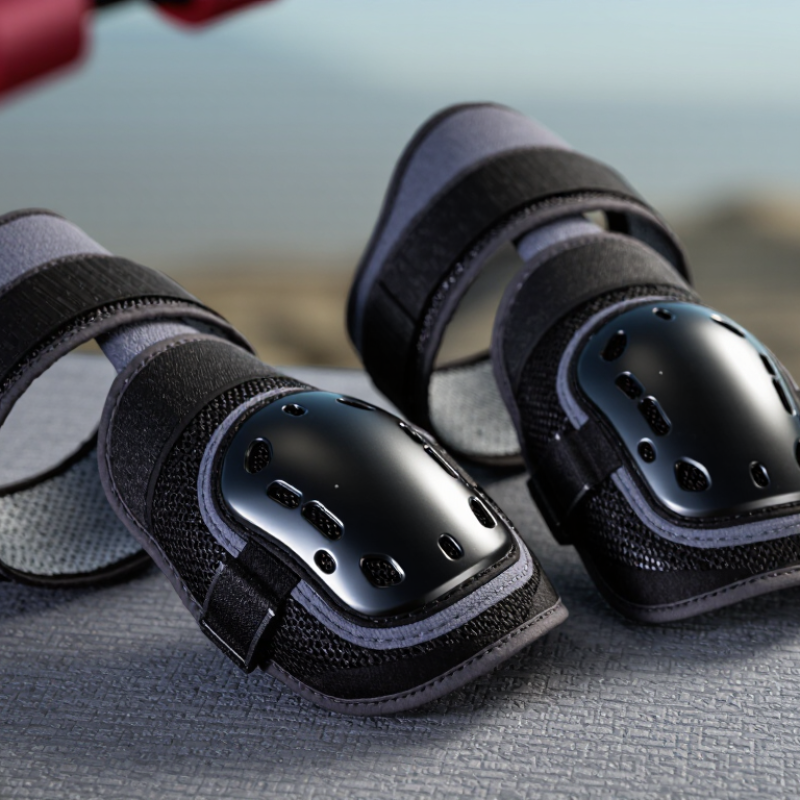
Mountain bike elbow pads are wearable guards that cushion the joint and cover nearby skin. Most combine an impact-absorbing foam layer with a tough outer fabric or flexible shell. In a fall, they can reduce direct contact with rocks, roots, and trail grit. They may also help limit scrapes when an arm slides across the ground. They cannot guarantee protection from fractures or severe impacts.

Fit matters as much as padding. A pad should stay over the elbow when the rider bends their arm, without pinching or restricting movement. Check seams, closures, and ventilation after repeated rides; worn foam may not perform as intended.

For a technical reference, EN 1621-1:2012 sets impact-transmission limits for motorcycle limb protectors: Level 1 allows a mean transmitted force up to 35 kN, while Level 2 allows up to 20 kN. This is a motorcycle-protector standard, not proof that every mountain bike pad meets it.

The distinction is easy to miss. Choose products with clearly stated test methods, and treat comfort claims as something to verify on the trail.

Key Materials and Design Features of Quality Elbow Pads

Quality mountain-bike elbow pads start with materials that manage both impact and abrasion. A viscoelastic foam insert can soften a direct hit, while a tough woven outer panel resists scrapes against rock and trail debris. Ventilated mesh helps release heat, but oversized vents may expose the foam to grit. Fit matters. Curved, articulated panels should follow the elbow through a bent riding position without pinching the inner arm. A small detail, yet riders notice it on long descents.

For a measurable impact benchmark, EN 1621-1:2012 sets mean transmitted-force limits of 35 kN for Level 1 and 20 kN for Level 2 limb protectors. This is a motorcycle-protector standard, not an MTB-specific certification, so the figures are useful references—not proof of trail performance. Reliable manufacturers should document impact-test methods, sample conditioning, and repeatability, rather than relying on foam descriptions alone. In production, stitching, seam placement, and consistent insert thickness deserve equal attention. A pad can test well on a bench and still migrate during a ride. That gap is easy to underestimate.

Best Mountain Bike Elbow Pads Manufacturer in China - Key Materials and Design Features of Quality Elbow Pads

Feature Common Materials or Design Purpose and Performance Considerations Practical Quality Check
Impact-absorbing pad EVA foam or flexible polyurethane-based foam Compresses under impact and helps cushion the elbow. Protection depends on the pad’s construction, coverage, fit, and testing—not material name alone. Check that the pad covers the intended impact area and stays in place during bending and riding movements.
Outer abrasion panel Durable knit, woven synthetic fabric, or reinforced textile Helps resist wear from contact with trails, clothing, and equipment. Fabric weight and weave can affect durability, stretch, and ventilation. Inspect high-contact areas for even construction, secure seams, and adequate reinforcement.
Hard-shell option Molded TPU or another impact-resistant polymer over a padded backing A shell can help the pad slide over rough surfaces and shield the underlying padding from abrasion. It may feel less flexible than a soft pad. Check for smooth edges, secure attachment, and a shape that does not restrict elbow movement.
Body-facing layer Moisture-managing polyester or nylon knit Helps move perspiration away from the skin and reduces friction during extended wear. Fabric performance varies by knit, finish, and fit. Look for a soft, even surface with no rough seams against the skin.
Ventilation Open-knit panels, perforated foam, or mesh sections Allows airflow and can improve comfort in warm conditions. More open construction may require reinforcement in high-wear areas. Check that ventilation openings are not blocked by the pad or poorly finished at their edges.
Retention and fit Stretch sleeves, elastic bands, adjustable straps, or silicone grip elements Helps limit pad movement while pedaling and riding over uneven terrain. The best arrangement depends on body shape and intended use. Try the pad with the arm bent and extended; it should remain positioned without excessive pressure or slipping.
Flex zones Articulated panels, segmented padding, or stretch-knit sections Supports elbow flexion and helps reduce bunching. Panel layout should balance mobility with protective coverage. Check that the pad bends naturally and does not create pressure points at the inner elbow.
Seams and construction Reinforced stitching, flat seams, and securely finished edges Construction quality affects durability and comfort, especially around stretch panels and areas that experience repeated movement. Inspect seam consistency, loose threads, and attachment points around the pad and straps.
Coverage and shape Contoured elbow cup with coverage tailored to the intended riding style A suitable shape can keep protective material centered over the elbow while allowing a useful range of motion. Confirm coverage in the riding position and check that the pad does not rotate during movement.
Care and maintenance Washable textile construction, following the product care instructions Regular care helps manage sweat and dirt. Heat, harsh chemicals, or improper washing may damage some foams, coatings, or grip elements. Review the care label and check that removable pads can be reinserted correctly after washing.

Material and construction choices vary by model. Evaluate fit, coverage, mobility, durability, and any product-specific testing information when comparing mountain bike elbow pads.

How Chinese Manufacturers Produce and Test Elbow Pads

Chinese manufacturers begin elbow-pad production by turning rider and trail requirements into a pattern. Designers map the pad around the elbow’s bend, then select foam, a flexible outer shell, breathable lining, and adjustable straps. Small details matter. A misplaced seam can rub during a long ride. Cutting teams check material direction, while sewing staff inspect stitch spacing and reinforcement near strap anchors.

Before assembly, samples are checked for dimensions and material consistency. Finished pads may undergo repeated bending, compression recovery, abrasion, and strap-pull tests. For impact evaluation, a controlled rig can record force transmission across several strikes. Technicians also examine whether the shell shifts or the padding bunches after movement. Results should be logged by size and production batch, not just reported as a single pass.

Fit checks add useful context. Test riders can pedal, lean, and move their arms while staff watch for slipping or restricted motion. Not every lab setup reflects wet dirt, heat, or a rough landing. A lab result is useful, but it is not a trail. That gap deserves honest attention. Manufacturers can use rider feedback to revise patterns, then retest the updated sample before wider production.

Standards and Certifications for Mountain Bike Elbow Pads

Mountain bike elbow pads face repeated knocks from rocks, roots, and hard-packed trails. Their protection should be supported by clear testing, not just thick foam or confident product claims. Some manufacturers test impact protectors against EN 1621-1, a standard developed for motorcycle limb protection. It can offer useful test information, but it is not a mountain-bike-specific standard. Check the product’s documentation to see exactly what was tested.

Look for test reports that identify the pad model, impact conditions, and results. In markets requiring protective equipment conformity, check for the relevant declaration and supporting technical documents. A logo alone proves little. Ask how the elbow pad stays in place during a fall, and whether seams, straps, and shell materials are checked during production. These details matter when a rider lands on a sharp trail edge.

Fit matters too. A certified protector that slips toward the forearm may leave the elbow exposed. Try bending your arm and reaching for the handlebar; the pad should stay centered without cutting off movement. Still, documents can be incomplete, and labels are not always easy to interpret. Manufacturers should explain limitations plainly, while riders should compare the paperwork with the actual pad.

How to Evaluate and Choose a Manufacturer in China

Best Mountain Bike Elbow Pads Manufacturer in China

How to Evaluate and Choose a Manufacturer in China

When evaluating a mountain bike elbow pad manufacturer in China, look beyond catalog photos. Request a sample in your intended size and inspect stitching, seam placement, and edge binding. Bend your arm repeatedly. The pad should stay centered without pinching when you grip a handlebar. Small details matter.

Ask how the supplier verifies impact materials, abrasion resistance, and batch consistency. Request recent test records and clarify which model and material each report covers. A report without traceable details is weak evidence. Ask for proof. If possible, compare several samples after repeated flexing and washing, following the care instructions. Record what changes.

Visit the factory or arrange a live video walkthrough. Observe cutting, sewing, padding assembly, and final inspection; then ask how defects are logged and corrected. Confirm sample lead time, minimum order quantity, material substitutions, and packaging in writing. Clear answers reduce surprises. Still, a polished call cannot guarantee steady production. One easy mistake is judging only one size; fit can shift between sizes. Ask for a size run before approving bulk production, and keep one approved sample as a reference.

Scroll to Top