How to Choose Paper Takeaway Containers for Your Business?

Choosing Paper Takeaway Containers is not a simple matter of picking the lowest price or the neatest-looking box. The right choice depends on what your business serves, how customers receive it, and how long the food must stay appealing. A hot curry needs different support from a chilled pastry. A sauce cup can expose a weak lid quickly. Small details matter.

Packaging researcher Dr. Susan Selke is a recognized expert in packaging, but I cannot verify a specific quotation from her about takeaway containers. Rather than invent one, this introduction uses a practical principle: “Choose packaging around the real journey from kitchen to customer.” That means checking container size, leak resistance, stacking stability, and how easily staff can pack orders during a busy service. It also means testing the actual food—not just an empty sample. Steam, grease, and waiting time can change how a container performs.

Paper options vary in construction, coatings, and suitability for different meals. Ask suppliers for clear product specifications, and compare samples under realistic conditions. Check whether lids fit securely and whether containers remain comfortable to carry. Then consider storage space and the pace of your service. A container that works beautifully on a display table may slow down a crowded lunch counter. That is easy to overlook.

No single option suits every menu. This guide will help you weigh practical trade-offs, ask better supplier questions, and choose Paper Takeaway Containers that fit your food and workflow. A little testing now can prevent avoidable frustration later.
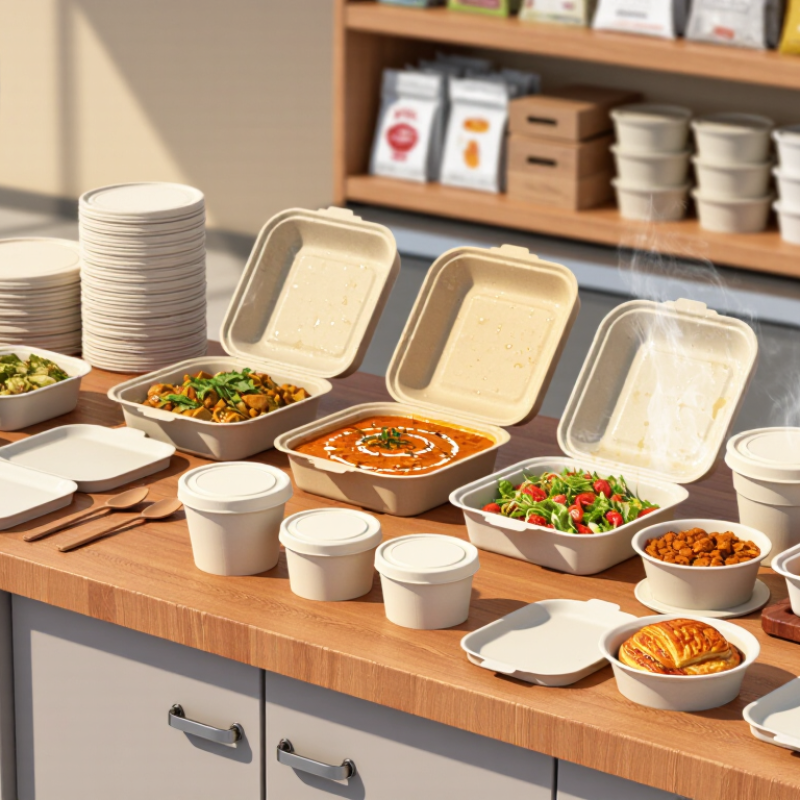
How to Choose Paper Takeaway Containers for Your Business?

Identify Your Business’s Packaging Needs

Before choosing paper takeaway containers, track what leaves your kitchen during a typical rush. Record the foods, portion sizes, sauces, and average travel times. A crisp salad and a hot curry need different interiors, even when their portions look similar. The National Restaurant Association’s 2024 State of the Restaurant Industry report says off-premises orders account for 75% of restaurant traffic. That volume makes fit and handling practical concerns, not small details. Start with your busiest menu items.

Test containers with real meals. Check whether steam softens the base, lids stay shut in a delivery bag, and sauces leak when the package tilts. Measure shelf space, too; oversized containers waste storage room and may slow packing. The first estimate is rarely perfect. A short trial can reveal what a catalog description cannot.

Budget for the whole workflow, not just the unit price. Compare how quickly staff can fill and close each format, and note whether sides need separate containers. The U.S. Environmental Protection Agency’s 2018 Facts and Figures report estimated that containers and packaging made up 28.1% of municipal solid waste by weight. That broad figure is a useful reminder to consider material use. Still, the right choice depends on your menu, portion control, and local waste-handling options. A simple packing log can expose awkward fits and unnecessary extras.

Compare Paper Materials and Barrier Options

Paper takeaway containers differ in stiffness, heat tolerance, and grease resistance. Solid bleached board offers a smooth surface for printing, while kraft board gives a natural look and sturdy feel. For oily foods, an uncoated wall may soften near the base. That small leak can matter.

Barrier choice changes performance and end-of-life options. Common treatments include polyethylene lining, water-based dispersion coatings, and grease-resistant paper treatments. Polyethylene can provide a reliable moisture barrier, but it may complicate recycling where mills cannot separate the layers. Dispersion coatings can be thinner, yet performance varies by formulation. Ask suppliers for test results using hot, wet, and oily foods—not just dry samples. The American Forest & Paper Association reported a 65–69% U.S. paper recycling rate for 2023. This figure covers paper broadly; it does not guarantee that coated food containers are accepted locally.

Tips: Test your actual menu in the container for at least 30 minutes. Check for soggy corners, lid fit, and grease transfer. Ask your local recycler about coated food packaging before making recyclability claims. A sample may look perfect on a counter, then disappoint after a delivery ride.

How to Choose Paper Takeaway Containers for Your Business? - Compare Paper Materials and Barrier Options

Material or Construction Common Barrier Options Performance and Limitations Suitable Foods End-of-Life Considerations What to Check with a Supplier
Uncoated kraft paperboard No added barrier, or a separate liner Paperboard can absorb oil and moisture. It is generally better for dry foods than for wet, greasy, or saucy meals. Sandwiches, bakery items, dry snacks, and foods served with a separate wrap or liner Paper recovery depends on local collection rules and whether the container is clean and dry. Food and grease can affect acceptance. Board strength, food-contact suitability, closure design, and whether a liner is required for the intended food
Kraft paperboard with a polyethylene (PE) lining PE lining on the food-contact side; some formats use a lining on both sides Provides a moisture barrier and can improve resistance to grease and leakage. Performance depends on the lining and container construction. Hot or cold meals, saucy foods, and some oily foods, subject to supplier testing The plastic lining can make paper recycling more difficult. Acceptance varies by local recycling systems and processing equipment. Which surfaces are lined, heat-use guidance, leak resistance, and local recycling acceptance
Paperboard with a dispersion or water-based barrier coating Coating applied to the paper surface for grease, moisture, or both Can provide a barrier without a conventional PE film, but the level of protection varies by coating, application, and food conditions. Bakery products, snacks, and selected greasy or moist foods when the coating is specified for that use Some products may be compatible with paper recycling, but recyclability is not guaranteed by the coating type alone. Local mill acceptance matters. Barrier test results, food-contact compliance, coating coverage, and documented recycling or composting claims
Paperboard with a PLA lining Polylactic acid (PLA) bioplastic lining Can provide a moisture barrier. Heat tolerance and performance vary by product; confirm suitability for hot foods and filling conditions. Selected cold or warm foods and beverages where the supplier confirms the container’s intended use PLA-lined packaging is not automatically home-compostable or recyclable with ordinary paper. Industrial composting requires suitable facilities and local acceptance. Maximum use conditions, lining details, certification scope, and whether a local industrial composting program accepts the item
Molded fiber or pulp container Uncoated fiber, a surface treatment, or a separate lining Rigid molded shapes can protect food, but untreated fiber may absorb liquids and oils. Barrier performance depends on the finish. Bowls, clamshell meals, and foods where a molded shape is useful; use a verified barrier for wet or greasy foods Disposal options depend on coatings, food contamination, and local paper or composting rules. Do not assume all molded-fiber items are compostable. Leak and grease testing, lid fit, stackability, temperature guidance, and disposal documentation
Paper container with a separate insert or liner Removable paper, grease-resistant paper, or another specified food-contact liner A separate liner can help protect the outer container, but it adds a component and may not prevent leakage unless designed for that purpose. Greasy baked goods, fried foods, and mixed menus where a removable liner is practical Separating components may improve sorting only where local systems accept each material. Food residue can still affect disposal options. Liner material, food-contact suitability, fit, grease resistance, and clear separation instructions for customers

Selection note: Barrier performance, temperature suitability, and end-of-life claims vary by product. Request food-contact documentation and test the container with your actual food, holding time, and serving conditions. Check local recycling or composting requirements before making disposal claims.

Select the Right Container Size and Design

Choosing the right container size starts with the food, not the shelf. Measure a typical serving and leave enough room for toppings, sauces, or steam. A container that is too small can squash a sandwich or spill dressing. Too much empty space lets food slide during delivery. Test a few sizes with real orders, including your busiest portions.

Keep the details practical. A shallow box suits pastries and wraps, while deeper bowls work better for salads or saucy meals. Compartments can separate crisp sides from moist foods, though they may reduce usable space. Check that the lid closes firmly and the container stacks without wobbling. Small details matter.

Design should support the meal and your workflow. A wide opening makes food easier to access, while a secure lid helps protect it in transit. If you add a logo or label, keep it readable on the actual container; curved or textured surfaces can distort small text. Plain designs can look less distinctive, but they may keep ordering simple. Do not assume one size fits every menu item. Portions change, and tests sometimes reveal that a seemingly neat design is awkward to pack.

Check Food Safety, Sustainability, and Compliance

How to Choose Paper Takeaway Containers for Your Business?

A safe container should match the food, not just the menu photo. Check that its paper, lining, inks, and adhesives are suitable for the food type and serving temperature. In the United States, FDA regulation 21 CFR 176.170 covers certain paper and paperboard components used with aqueous and fatty foods. Ask suppliers for food-contact documentation and test conditions, especially for hot, oily meals. Test it hot. A container that softens during a busy lunch rush can spoil the customer experience.

Paper is not automatically greener. The US Environmental Protection Agency reported that 68.2% of generated paper and paperboard was recycled in 2018, in its National Overview of Recycling report. That figure covers the wider material stream, not takeaway packaging specifically. Grease, food residue, plastic linings, and local sorting rules can affect whether a container is accepted. I would not treat a recycling symbol as proof. Check with local waste providers and ask suppliers whether the container’s coating can be separated or processed.

Compliance also varies by market. Confirm the applicable food-contact rules where the container will be sold, and keep supplier declarations, test reports, and packaging specifications on file. Review claims such as “compostable” or “recyclable” against local facility access and recognized standards. Paper can leak. Run a simple trial with soup, fried food, and a delivery-length hold; inspect seams, lids, and the base before placing a large order.

Evaluate Suppliers, Costs, and Product Quality

Choosing a paper takeaway container starts with the supplier, not the sample photo. Ask for written specifications covering dimensions, paper weight, coatings, and intended food use. Request samples from the same production range you plan to order. A container that holds a dry pastry may soften under hot, oily food. Test it with your actual menu items, including sauces, and leave them inside for a realistic service period. Small details matter. Check whether lids fit securely and whether stacked containers arrive without crushed corners. Ask suppliers about lead times, minimum order quantities, and how they handle defects. Clear answers are useful; vague promises are not.

Compare the full cost, not only the price per container. Include freight, storage, lid costs, and any fees for custom sizing or printing. A cheaper unit can become expensive if its fit causes spills or staff need extra packaging. Test several samples before committing. Fill one with a hot meal, carry it for ten minutes, then inspect the base and seams. This is not a lab test, but it can reveal practical problems. I would also ask for relevant food-contact documentation and keep it with purchasing records. One successful trial is not proof that every future batch will match. Agree on measurable quality checks, such as dimensions and leak performance, and revisit them when materials or production details change.

Scroll to Top