A Cleanroom Window may look like a simple panel, yet its frame, seals, glazing, and installation can affect the room’s performance. Global buyers also face different project conditions, shipping distances, and supplier documentation. A specification that works in one facility may not suit another. Small details matter.
For transparency, the expert and quotation below are illustrative, not a verified real-world attribution. Fictional cleanroom glazing specialist Maya Chen offers this reminder: “A window is part of the cleanroom envelope, not a decorative opening.” It is a useful lens for comparing options. Buyers should examine flush interior surfaces, sealed joints, visibility, thermal performance, and compatibility with cleaning routines. Ask suppliers for drawings and product data, not just attractive photographs.
The seven tips ahead focus on practical checks: define the room requirements, compare frame and glass options, confirm dimensions, review certifications, assess installation support, clarify lead times, and evaluate after-sales service. Look closely at corners and perimeter seals; that is where a neat sample can differ from a finished installation. Price still matters. It should not be the only measure. Even careful buyers can miss a detail when timelines are tight, so leave room for questions before approving a purchase.
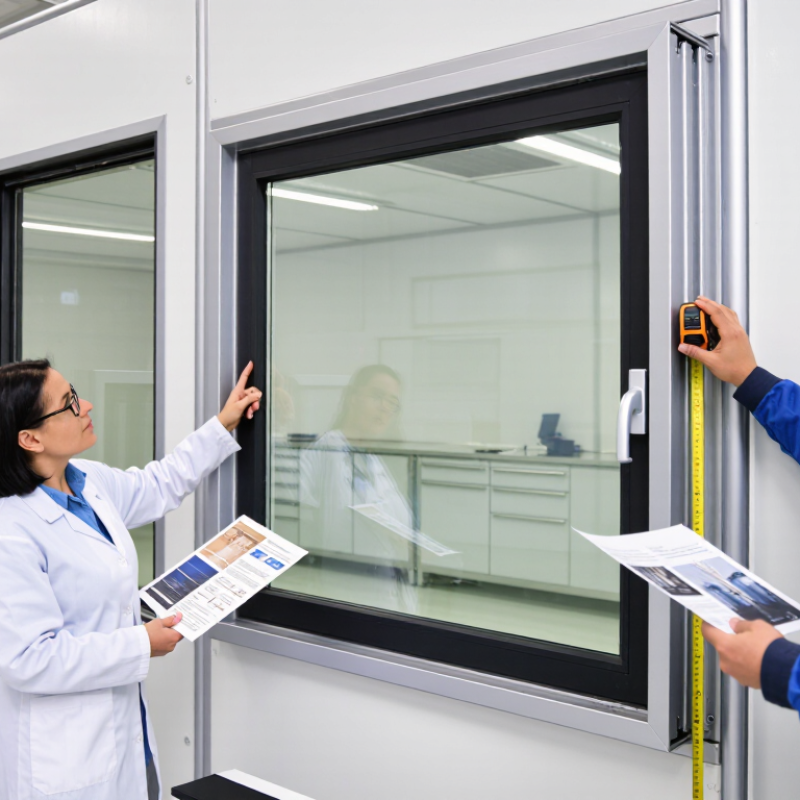
Cleanroom window requirements should be defined by room class and application, not appearance alone. Start with the facility’s design criteria and confirm the window assembly matches the wall system. A flush interior face can reduce ledges where dust may collect. Check whether joints can be sealed, and whether the glass resists the cleaning agents used on site. Small details matter.
Tips: Specify the room class, wall thickness, opening size, and cleaning method before requesting quotes. For viewing production areas, consider glare and sightlines. For rooms with temperature differences, ask how the assembly limits condensation. Confirm these details against project requirements; assumptions can cause delays.
The right configuration depends on how the room operates. A window near a frequently cleaned pass-through may need different detailing from one used only for visual monitoring. Ask for drawings showing frame depth, seals, and installation interfaces. It is easy to over-specify glass while overlooking the perimeter joint. I would verify that connection early, since even a well-chosen pane cannot compensate for a poorly coordinated opening.
A cleanroom window is part of the room’s contamination boundary, so compare its frame, glazing, and seals as one assembly. ISO 14644-1:2015 sets a maximum concentration of 3,520 airborne particles per cubic metre at 0.5 micrometres for ISO Class 5; the ISO Class 7 limit is 352,000. Numbers matter. They do not, by themselves, specify a window.
Aluminum frames are light and practical, while stainless steel may suit areas needing frequent wipe-downs or stronger chemical resistance. Check the finish, joints, and mounting detail—not just the metal. There is no universal winner. Flush-mounted frames reduce ledges where dust can settle, but installation quality still matters.
Tempered glass offers impact resistance; laminated glass can help retain fragments if broken. Double glazing may improve insulation, though its edge construction and sightline can complicate cleaning. Ask how the sealant handles your disinfectants and whether the supplier provides compatibility data. A continuous, smooth seal helps limit particle traps and air leakage. This is easy to overlook. Review a full-size sample or installation detail before ordering; drawings rarely show every awkward corner.
Cleanroom windows should match the room’s required classification, not just look airtight. ISO 14644-1:2015 sets airborne particle limits; at 0.5 micrometres, the maximum is 3,520 particles per cubic metre for ISO Class 5 and 352,000 for ISO Class 7. These figures classify the room, not an individual window. Ask suppliers to explain how their assembly supports the project’s cleanliness and pressure-control requirements. Request test records that identify the tested configuration, method, date, and calibrated equipment. ISO 14644-3:2019 describes cleanroom test methods, including leakage and airflow-related testing. Details matter.
Tip: Check that records cover the complete window assembly, including frame, glazing, seals, and joints—not only the glass. Ask for material specifications, inspection criteria, and traceability for key components. A useful supplier quality system should document incoming checks, assembly inspections, nonconformance handling, and corrective actions. Compare the submitted records with the actual product drawings and installation details. Missing dates or unclear test boundaries deserve follow-up.
For global projects, confirm that certificates and reports apply to the destination project’s stated requirements; a generic certificate may not prove suitability. Ask how the supplier controls sealant changes and replacement parts, since small differences can affect cleaning and sealing. I would still verify installation conditions on site: a well-tested window can underperform if its perimeter joint is poorly finished. That step is easy to overlook.
A cleanroom window should match the room’s particle class, pressure regime, and wall construction—not just its opening size. ISO 14644-1:2015 sets a limit of 352,000 airborne particles per cubic metre at 0.5 micrometres for ISO Class 7, and 3,520,000 for Class 8. These figures show why frame joints and glazing seals matter. Ask suppliers for drawings, seal details, and test documentation for the proposed assembly. Small gaps can complicate cleaning and pressure control.
Customization starts with the wall. Confirm its thickness, panel material, and cutout dimensions before approving a frame. Double-glazed units may help reduce condensation, but check edge temperatures and room humidity with the project’s HVAC team. For retrofit work, measure the opening at several points; older walls are rarely perfectly square. A millimetre matters. Also confirm whether the window needs flush glazing, rounded internal edges, or a specific fire or impact rating.
Installation can undermine a good specification. Agree on who supplies sealant, protects the room during fitting, and verifies the finished perimeter. Request installation steps that limit dust, plus a cleaning method compatible with the facility’s disinfectants. ISO 14644-1 classifies airborne cleanliness; it does not certify a window assembly or its installation. That distinction is easy to miss. Keep the submittal, material records, and inspection results together, then review them with facility engineering before procurement.
| 7 Cleanroom Window Buying Tips for Global Buyers - Evaluate Customization, Installation, and Facility Compatibility | ||||
|---|---|---|---|---|
| Tip | Buying Dimension | What to Check | Why It Matters | Information to Confirm Before Ordering |
| 1 | Opening size and wall interface | Confirm the finished opening dimensions, wall thickness, frame depth, and whether the window must sit flush with one or both wall faces. | Cleanroom partitions vary by construction and thickness. A mismatch can create installation gaps or surfaces that are difficult to clean. | Dimensioned opening drawings; wall-panel or wall-system details; required frame projection; installation tolerances. |
| 2 | Glazing configuration | Choose glazing to suit the location and operating conditions. Options may include single glazing or sealed double glazing, with tempered or laminated safety glass where appropriate. | Glazing affects visibility, safety, thermal performance, and the risk of condensation. The right specification depends on the facility and surrounding environment. | Required glass type and thickness; number of panes; safety requirements; temperature and humidity conditions on each side. |
| 3 | Cleanable frame and perimeter | Review frame material, finish, joints, sealant, and exposed edges. Ask how the assembly supports smooth, accessible cleaning. | Crevices, damaged finishes, and poorly sealed interfaces can collect residue and complicate routine cleaning. | Frame material and finish; joint details; compatible cleaning agents; perimeter sealing method; maintenance access. |
| 4 | Facility pressure and environmental conditions | Identify pressure differences, temperature changes, humidity, and any process-specific exposure at the proposed location. | These conditions may affect seals, condensation risk, and the performance of the installed assembly. Requirements should be checked for the actual application. | Operating conditions on both sides; pressure-control requirements; expected temperature range; condensation-control needs. |
| 5 | Customization and visibility | Specify shape, dimensions, sightlines, privacy needs, and any required features such as blinds or special glazing. | Early coordination helps ensure the window fits the process, room layout, and cleaning approach without obstructing equipment or workflows. | Approved drawings; viewing requirements; privacy or shading needs; permitted accessories; confirmation that accessories suit the cleanroom environment. |
| 6 | Installation sequence and site readiness | Determine whether the window is installed during wall construction or retrofitted, and confirm access, lifting, protection, and sealing arrangements. | Installation conditions can affect fit, finish, and the ability to protect glazing and adjacent cleanroom surfaces during construction. | Installation method; site measurements; wall-opening readiness; access constraints; responsibility for sealants and final inspection. |
| 7 | Documentation and acceptance | Request product specifications, approved installation details, cleaning guidance, and inspection criteria relevant to the project. | Clear documentation helps the facility team review compatibility and verify that the installed window matches the approved design. | Material and glazing data; drawings; care instructions; project-specific inspection checklist; applicable local code or project requirements. |
For cleanroom windows, packaging is part of product protection, not an afterthought. Ask for photos of the actual packing method: edge guards, rigid separators, moisture barriers, and clear labels showing orientation. Specify whether glass faces need protective film and whether frames require separate cushioning. Confirm crate dimensions and gross weight before booking freight; these details affect handling and unloading at the destination. Fragile edges matter.
Match the packing plan to the full route, including transfers, port storage, and local delivery. The World Bank’s 2023 Logistics Performance Index compared logistics performance across 139 countries, using factors that include shipment timeliness and reliability. That is a useful reminder: a sound export plan must account for more than the factory gate. Request the shipping marks, packing list, and pre-dispatch inspection photos. If transit testing is relevant, ask whether the supplier uses a recognized procedure, such as one published by the International Safe Transit Association. Not every route needs the same protection.
Agree on after-sales support before payment. Get written guidance for receiving inspections, installation questions, and claims involving cracked glass or damaged frames. Confirm response hours, required evidence, and whether replacement parts can be shipped separately. Keep photos of the unopened crate and any visible damage. Small detail, big help. A gap often remains between promised support and what buyers can access across time zones, so test the contact channel with a practical question before ordering.
Confirm Packaging, Shipping, and After-Sales Support for Global Orders
The seven checks are grouped by when buyers typically verify them: three before ordering (specifications, cleanroom suitability, and quality documentation), three for delivery (protective packaging, export documents, and shipment tracking or insurance), and one after delivery (warranty and service support). Bars show checklist-item counts, not survey results.
Copyright © 2021 United Orthopedic Corporation All Rights Reserved.
Necessary cookies are absolutely essential for the website to function properly. This category only includes cookies that ensures basic functionalities and security features of the website. These cookies do not store any personal information.
Any cookies that may not be particularly necessary for the website to function and is used specifically to collect user personal data via analytics, ads, other embedded contents are termed as non-necessary cookies. It is mandatory to procure user consent prior to running these cookies on your website.