How to Choose the Best HIFEM Slimming Machine?
Choosing a HIFEM Slimming Machine involves more than comparing prices or attractive product photos. HIFEM devices use electromagnetic energy to trigger muscle contractions, but results can vary between people and depend on the device, treatment plan, and individual circumstances. Claims about dramatic body changes deserve careful scrutiny. Realistic information is more useful.
Start by checking the manufacturer’s technical documentation, operator training, maintenance requirements, and customer support. Ask what areas the machine is designed to treat, how sessions are configured, and what evidence supports its stated performance. Clear answers matter. So does clear labeling. A polished screen and comfortable applicator may improve the user experience, but they do not prove effectiveness or reliability. Request a live demonstration, review the warranty, and confirm that replacement parts and service are available. These details can reveal more than a brochure.
Safety should remain part of the buying decision. Ask about screening procedures, contraindications, and when a client should seek advice from a qualified healthcare professional. Do not treat vague assurances as clinical evidence. Compare operating costs, staff training, and realistic treatment capacity—not just the initial purchase price. A machine that is difficult to maintain may become expensive over time. Even careful research cannot guarantee a particular outcome. That is worth admitting. This guide outlines practical questions to help clinics and buyers assess a HIFEM Slimming Machine with informed expectations, attention to evidence, and a healthy degree of skepticism.
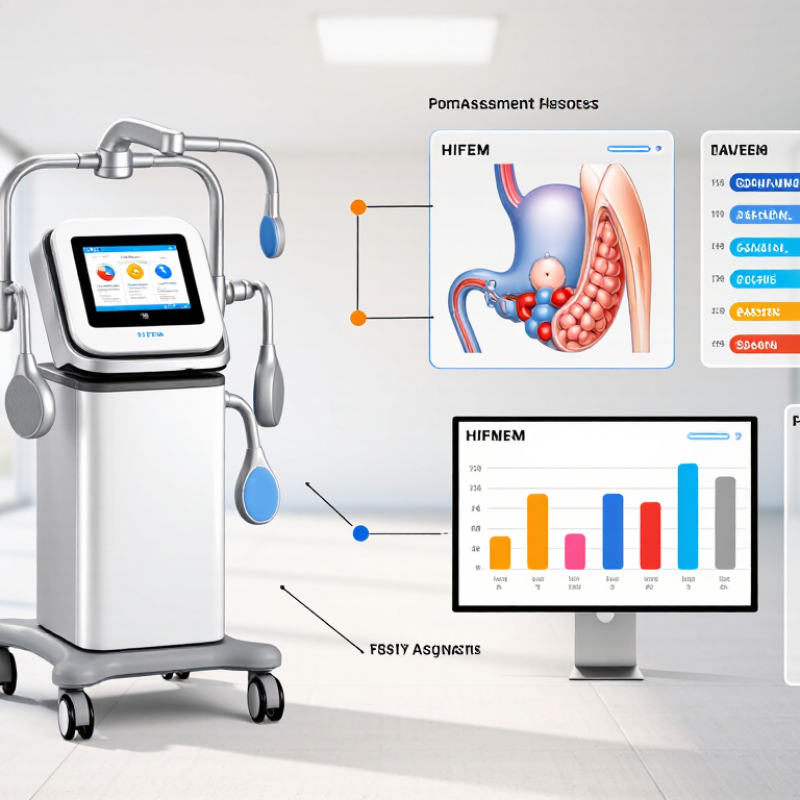
What Is HIFEM Technology and How Does It Support Body Sculpting?
HIFEM means high-intensity focused electromagnetic technology. It creates rapidly changing magnetic fields that stimulate motor nerves beneath the skin. Those nerves trigger repeated muscle contractions while a person lies comfortably on an applicator. The sensation can feel like intense exercise, though it is not a substitute for physical activity.
The mechanism is straightforward. Muscles contract; they do not selectively “melt” fat. A small peer-reviewed imaging study of abdominal treatment reported a 15.4% average increase in muscle thickness and an 18.6% reduction in measured fat thickness. These figures describe that study’s participants, not guaranteed outcomes for every patient.
HIFEM supports body sculpting by targeting muscle groups such as the abdomen or buttocks. Treatment typically involves several sessions, with applicators held in place by straps and the intensity adjusted to comfort. Results depend on baseline fitness, treatment settings, and measurement methods.
Evidence remains limited. A small sample and short follow-up make broad conclusions uncertain, and published results should be interpreted cautiously. When evaluating a machine, ask for peer-reviewed data on its exact technology, treatment protocol, and follow-up period. Check whether outcomes were assessed with standardized imaging rather than photographs alone.
Comfort matters, too. A treatment that feels intolerable may be difficult to complete. And muscle stimulation is not weight loss.
Which Body Areas and Treatment Goals Are Suitable for HIFEM?
HIFEM treatments are generally considered for specific muscle groups, not overall weight reduction. Common target areas include the abdomen, buttocks, thighs, and arms, depending on the device and its applicators. A person might seek stronger abdominal muscles or a firmer-looking gluteal area. Small goals matter.
The best fit is often someone near a stable weight who wants to support muscle conditioning in a chosen area. HIFEM should not be presented as a substitute for exercise, nutrition, or medically supervised weight management. Results vary, and treatment response can depend on anatomy, session settings, and consistency. That part is easy to overlook.
A qualified provider should assess the treatment area, health history, and personal expectations before recommending a plan. Ask which muscles the applicator reaches, what sensations are expected, and how progress will be measured. Some people may not be suitable, including those with certain implanted electronic devices or other relevant medical conditions. The screening details matter. Evidence and device instructions can differ, so avoid promises of guaranteed fat loss or a particular body shape. If the main goal is a large change on the scale, HIFEM may not match that goal.
How to Choose an HIFEM Slimming Machine?
Common Treatment Areas and Typical Goals
This qualitative guide reflects commonly discussed treatment areas and is not clinical outcome data. HIFEM is used to stimulate muscle contractions; suitability and body-contouring claims vary by device, individual health, and treatment plan. It is not a weight-loss treatment. Consult a qualified healthcare professional and check the intended use and local regulatory status of any device.
How to Compare HIFEM Machine Features and Performance
When comparing HIFEM slimming machines, look beyond advertised power. Ask for measured magnetic-field output, pulse frequency, treatment duration, and independent testing methods. Confirm that settings remain consistent under real treatment conditions, not only on a display. Fit matters, too: applicators should sit securely against the treatment area, with clear instructions for positioning and session spacing. Small details count.
Clinical results offer context, not a guarantee. A 2019 prospective MRI study of 22 adults reported average abdominal fat-thickness reduction of 18.6% and muscle-thickness increase of 15.4% one month after treatment. The study was published in Lasers in Surgery and Medicine. Its small sample and short follow-up limit what those figures can tell buyers about long-term results. Numbers need context.
Compare machines by checking whether their evidence uses MRI or other stated measurement methods, and whether follow-up timing is disclosed. Request complete study protocols, adverse-event reporting, and maintenance records. Ask how the device monitors temperature and how operators adjust treatment for different body areas. If a supplier cannot explain these points plainly, pause. Performance claims without comparable data are difficult to assess. A transparent service plan and operator training are practical indicators of dependable use.
What Safety, Certification, and Maintenance Standards Should You Check?
When evaluating a HIFEM slimming machine, request documents for the exact model and intended use. Check electrical safety testing against applicable IEC 60601 standards, electromagnetic compatibility testing, and the manufacturer’s ISO 13485 quality-system certification. Confirm that certificates and test reports match the machine’s serial or model number. A certificate alone does not prove treatment effectiveness. No certificate replaces inspection.
Clinical evidence also matters. A 2019 MRI-based study by Kinney and Lozanova followed 22 participants after four treatments. It reported measurable changes in abdominal muscle thickness and subcutaneous fat, with no serious adverse events reported in the study. That is a small sample, not a guarantee of safety for every client. Ask providers to explain contraindications, screening procedures, expected discomfort, and how they document adverse events. Clear answers matter.
Maintenance affects safety over time. Ask for a written service schedule, calibration records, and instructions for checking applicator cables, connectors, cooling, and emergency-stop functions. Keep records. Staff should know how to clean contact surfaces and what to do if a device overheats or behaves unusually. I would not treat paperwork as proof of good care; a tidy service log and a hands-on pre-use check are useful, but neither replaces qualified technical servicing.
How to Evaluate Treatment Costs, Providers, and Expected Results
When comparing HIFEM treatment costs, request a written quote covering the full course, not just one session. Ask whether consultation, follow-up, and possible maintenance visits are included. The American Society of Plastic Surgeons’ 2023 procedural statistics report lists an average physician fee of $1,157 for noninvasive fat-reduction procedures. This is a broad category, not a HIFEM price list, so local quotes may differ. Get the details in writing.
Provider experience matters. Ask who performs the treatment, how they assess suitability, and what they do if you feel discomfort. A qualified clinician should review your health history and explain realistic limits, not promise a particular body shape. Look for clear before-and-after photos taken under similar lighting and positioning. Small details count.
For expected results, a small MRI-based clinical study of 22 adults reported increased abdominal muscle thickness and reduced fat-layer thickness after a treatment course. Those findings are not a guarantee; study size, protocols, and individual responses vary. HIFEM is intended for body contouring, not weight loss. Ask what change is realistic for your starting point, when it may appear, and how long it might last. Some uncertainty remains. That is worth discussing.