Choosing the best Lung Excerciser in 2026 is not about picking the most advanced-looking device. It is about matching the tool to your breathing goal, comfort, and clinical advice. Some devices provide resistance during inhalation or exhalation. Others, such as incentive spirometers, encourage slow, deep breaths. They are not interchangeable. A bright display cannot tell you which one suits your needs.
Respiratory-care expert Dean Hess has written extensively about respiratory care and device use. A practical takeaway from his work is simple: understand the device’s purpose and use it correctly. That is a paraphrase, not a direct quotation. Keep that in mind when comparing resistance settings, mouthpiece fit, cleaning instructions, noise, and portability. A mouthpiece that feels awkward after two minutes may end up in a drawer. Small details matter.
This guide will explain what to compare, which questions to ask, and when to seek professional guidance. Look for clear instructions and claims that match credible evidence. Be cautious of promises to “strengthen your lungs” without explaining how, or for whom. A device does not replace diagnosis or prescribed treatment. If breathing exercises cause pain, dizziness, or unusual breathlessness, stop and contact a healthcare professional. Personal needs differ. The best choice is the one you can use safely, consistently, and for a clearly defined purpose.
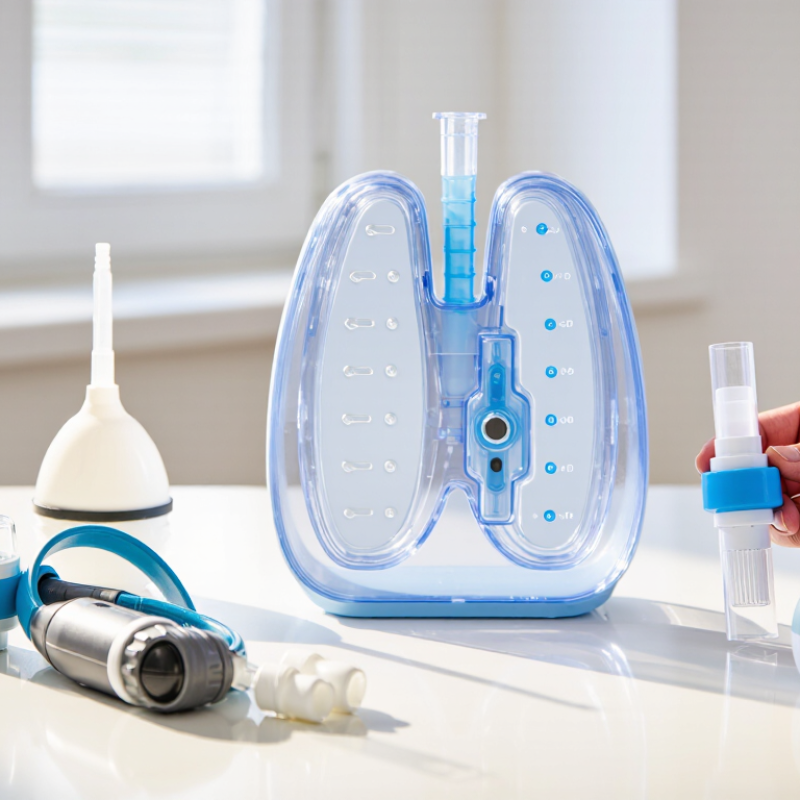
Choosing a lung exerciser starts with its job. An incentive spirometer gives visual feedback as you inhale slowly and deeply; the rising marker helps you practise a target breath. It may suit someone following a clinician’s post-operative breathing plan. But it is not a strength trainer. The American Association for Respiratory Care’s clinical practice guideline says incentive spirometry should not be used alone to prevent post-operative lung complications; deep breathing, coughing, and early movement matter too. Small distinction. Big difference.
Inspiratory muscle training uses resistance to make the breathing muscles work harder. It may be considered when the goal is to improve inspiratory strength, under guidance from a health professional. A 2015 Cochrane review of 12 trials involving 695 adults preparing for heart or major abdominal surgery found pre-operative training was associated with fewer cases of post-operative pneumonia: risk ratio 0.53. The evidence applies to those studied groups, not every person seeking a “lung exerciser.” Check the prescribed purpose, adjustable resistance, and whether progress can be monitored. A stronger setting is not automatically better. I’d be cautious about choosing by appearance alone; the right tool depends on the goal and the person using it.
Match the Device to the User’s Clinical Needs and Training Goals
Start with the user’s clinical need, not the device’s popularity. Someone recovering from surgery may need coached deep-breathing practice, while a person with COPD may benefit from structured inspiratory muscle training. These are different tasks. The 2025 Global Initiative for Chronic Obstructive Lung Disease (GOLD) report supports pulmonary rehabilitation as part of COPD care; a home exerciser should complement, not replace, an individualized plan. Ask a clinician which breathing muscles or skills need training.
Match resistance and feedback to the user’s ability. A device that feels manageable today may become too easy, but increasing resistance too quickly can cause strain or poor technique. Look for clear settings and a way to track sessions. The ERS/ATS technical standard for field walking tests notes that about 30 metres can represent a meaningful change in six-minute walk distance for people with COPD. That is a monitoring reference, not a personal target. One reading rarely tells the whole story.
Tips: Check comfort, cleaning instructions, and whether the user can read the display without assistance. Begin with clinician-recommended settings. Fit matters. Stop and seek medical advice if training causes unusual breathlessness, chest pain, or dizziness. A device can look impressive and still be a poor match. Reassess technique and goals after a few weeks.
Set Resistance by MIP: Many IMT Protocols Begin Near 30% of MIP
When comparing inspiratory muscle trainers, look for adjustable resistance and clear settings. MIP means maximal inspiratory pressure, a measure of how strongly you can breathe in against resistance. A clinician can assess it with a pressure device and use the result to set a training target. Many protocols begin near 30% of MIP, but this is not a universal prescription. Your health, symptoms, and training goal matter.
A practical device should feel comfortable at the mouth, stay steady during use, and be easy to clean. Check that resistance changes in small, readable steps. If the setting feels unexpectedly hard, do not force a breath just to match a number. Progress may be gradual. Honestly, the right setting can still feel awkward at first; note how you respond and discuss persistent discomfort with a qualified clinician.
Tips: Ask how your MIP was measured and how often your target should be reviewed. Sit upright, seal your lips around the mouthpiece, and follow the device instructions. Stop and seek clinical advice if training causes chest pain, marked breathlessness, or dizziness. A lower setting may be appropriate while you build tolerance.
When comparing lung exercisers, look for a resistance range that matches your current ability and allows gradual adjustment. A device that feels difficult on the first breath may discourage steady practice. A very easy setting may offer too little challenge. Wider is not automatically better; the useful range is one you can control without straining. Small details matter.
Feedback should make each breath understandable. A visible marker, measured target, or simple indicator can help you notice whether you are reaching the intended effort. Check that the scale is clear and repeatable, not just decorative. If readings are confusing, ask a respiratory clinician how to interpret them. Feedback supports practice, but it does not diagnose a problem.
Cleaning is part of regular use. Look for detachable mouthpieces and surfaces that can be washed and dried according to the instructions. Narrow parts that stay damp can be awkward to maintain. Training dose matters too: confirm the recommended breaths, repetitions, and rest periods, then follow guidance suited to your health. More is not always better. Keep a brief log of sessions and any unusual discomfort. If you have a lung condition, recent surgery, or symptoms during training, seek professional advice before changing resistance or dose. I would not assume one device suits everyone; fit and ease of use can take a little trial and reflection.
| Device type | Resistance and adjustment | Feedback | Cleaning considerations | Typical training dose or use | Best suited to |
|---|---|---|---|---|---|
| Volume-oriented incentive spirometer | Usually no adjustable resistance setting. The user inhales slowly to raise a piston or indicator toward a volume target. | Visual feedback shows inspiratory volume or flow, depending on the device design. | Clean the mouthpiece and other user-contact parts as directed. Allow parts to dry fully; do not assume every component is dishwasher-safe. | Often prescribed after surgery in repeated sets while awake. Follow the clinician’s instructions for repetitions and frequency; protocols vary. | Practising slow, deep inhalation, particularly when an incentive spirometer has been recommended during recovery. |
| Threshold inspiratory muscle trainer | Provides resistance during inhalation. The setting is adjustable on many models; available ranges differ, with some devices covering approximately 9–41 cm H₂O. Confirm the unit’s range and setting increments. | Generally provides a set resistance level rather than a digital record of each breath. The user must maintain the prescribed technique. | Check whether the mouthpiece and valve can be removed for cleaning. Follow the manual’s instructions for washing, drying, and replacing parts. | A common supervised training format is repeated breaths, often around 30 breaths per session, with resistance prescribed and progressed according to assessment. The appropriate dose is individual. | Structured inspiratory muscle training when a clinician has assessed the user and selected an appropriate resistance. |
| Electronic inspiratory training device | Resistance mechanism and range vary by device. Check whether resistance is measured in cm H₂O, how it is adjusted, and whether the setting can be matched to an assessed training target. | May display breath performance, target completion, or session history. Feedback features differ; a screen does not by itself confirm correct technique. | Follow the manufacturer’s cleaning directions, especially for electronic components. Confirm which breathing-contact parts are removable and washable. | Use the prescribed number of breaths, sessions, and resistance level. Increase the load only according to the training plan or professional advice. | Users who benefit from on-device prompts or session tracking and can use the device as instructed. |
| Positive expiratory pressure (PEP) device | Creates resistance during exhalation. Resistance settings and ranges vary; it is not the same as an inspiratory muscle trainer. | Typically offers limited visual feedback. Correct exhalation technique and any prescribed pressure target matter. | Clean and dry the mouthpiece and removable parts according to the instructions. Do not share personal breathing equipment unless a proper cleaning protocol allows it. | Use only the technique and schedule provided by a clinician; the regimen depends on the reason for treatment. | Specific airway-clearance plans when PEP has been recommended; it is not a direct substitute for inspiratory muscle training. |
Selection note: “Lung exerciser” can refer to different device types with different purposes. Compare resistance units, adjustment steps, feedback, and cleaning instructions for the exact device. Training doses are not interchangeable; follow a clinician’s plan, particularly after surgery or when managing a respiratory condition.
When choosing a lung exerciser, verify the exact model’s regulatory status in the FDA 510(k) database. A 510(k) clearance applies to a specific device and its stated intended use; it does not automatically cover similar models or accessories. Check the FDA decision summary, product code, and listed indications. Registration or listing alone is not clearance. The distinction is easy to miss, especially when product pages use broad “FDA registered” wording. Paperwork is dull, but it matters more than a glossy airflow chart.
Tips: Match the device’s intended use to your needs, and ask a clinician if you have a lung condition or recent surgery. Look for clear cleaning instructions, comfortable mouthpieces, and measurable resistance settings. Don’t treat a clearance record as proof that one device suits everyone.
The ATS/ERS 2019 spirometry technical standard calls for at least three acceptable breathing maneuvers; in adults, the two largest FEV1 and FVC readings should generally be within 150 mL. These are clinical testing criteria, not shopping requirements for an exerciser. Still, they show why a simple training device should not be mistaken for a diagnostic tool. If its instructions promise disease diagnosis, check the exact cleared indication before relying on that claim.
How to Choose the Best Lung Exerciser in 2026? Check Regulatory Status and Safety: FDA 510(k) Clearance Is Device-Specific
Regulatory facts, not product ratings: 1 = accurate; 0 = inaccurate. Check the exact device and its clearance details—company registration or device listing alone does not establish 510(k) clearance. FDA: 510(k) Premarket Notification · FDA: Device Registration and Listing
Copyright © 2021 United Orthopedic Corporation All Rights Reserved.
Necessary cookies are absolutely essential for the website to function properly. This category only includes cookies that ensures basic functionalities and security features of the website. These cookies do not store any personal information.
Any cookies that may not be particularly necessary for the website to function and is used specifically to collect user personal data via analytics, ads, other embedded contents are termed as non-necessary cookies. It is mandatory to procure user consent prior to running these cookies on your website.