What is Retinol Palmitate and How to Use It for Skin Care?
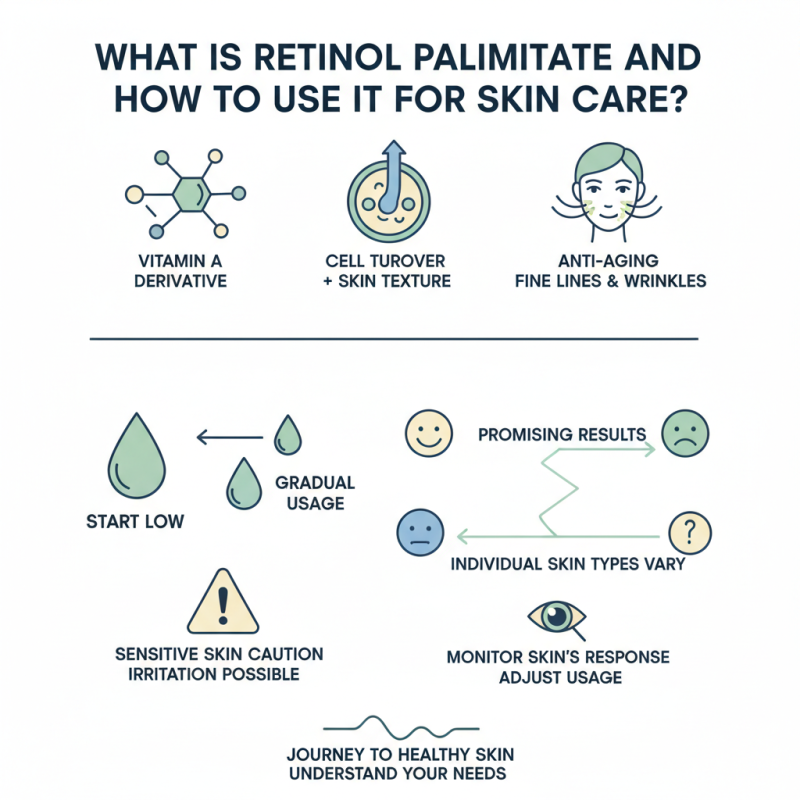
Retinol Palmitate is a derivative of vitamin A, renowned for its skin benefits. It's a popular ingredient in skin care products due to its effectiveness in promoting cell turnover and improving skin texture. Many users turn to Retinol Palmitate for its anti-aging properties, hoping to reduce fine lines and wrinkles.
Using Retinol Palmitate requires some care. It can cause irritation, particularly for sensitive skin. Start with lower concentrations to gauge your skin's reaction. Gradually increase usage as your skin adapts. While results can be promising, not everyone finds success. Individual skin types react differently, making it essential to approach with caution.
Incorporating Retinol Palmitate into your routine can be rewarding but may come with challenges. Keep an eye on how your skin responds, adjusting your usage accordingly. The journey to healthy skin isn’t always straightforward, and understanding your skin's unique needs is crucial.
What is Retinol Palmitate and Its Role in Skin Care
Retinol Palmitate is a derivative of vitamin A. It plays a crucial role in skin care by promoting cell turnover and reducing signs of aging. This compound helps to improve skin texture and tone. It can unclog pores, making it beneficial for acne-prone skin. With regular use, Retinol Palmitate can lead to softer, smoother skin.
When incorporating Retinol Palmitate into your routine, start gradually. Apply a small amount, allowing your skin to adjust. Use it at night to minimize potential irritation. Always follow up with sunscreen during the day. Even though this ingredient is milder than other retinoids, some users still experience redness or peeling. It’s essential to listen to your skin.
**Tips:** Monitor your skin's response. If irritation occurs, reduce usage frequency. Stay hydrated, as this can help combat dryness. Always consult a skincare professional if uncertain about your routine. This ensures you achieve the best results without compromising skin health.
Retinol Palmitate Usage and Effectiveness in Skin Care
Benefits of Retinol Palmitate for Skin Health
Retinol Palmitate is a derivative of vitamin A. It offers several benefits for skin health. This compound can enhance cell turnover, making your skin look fresh. Regular use may help reduce fine lines and wrinkles. Many people seek smoother, more youthful skin, and Retinol Palmitate can assist with this goal.
This vitamin A derivative also helps improve skin texture. It encourages collagen production, leading to firmer skin. Users often notice a brighter complexion over time. Proper application is key; start with a low concentration to avoid irritation. Gradually increase usage as your skin builds tolerance. Remember, everyone's skin is different. Adjustments may be necessary for optimal results.
Photosensitivity is a concern with all retinoids. Applying sunscreen daily is crucial to protect your skin. Keep an eye out for redness or dryness. These side effects may require a break or reduced frequency in use. Observing how your skin reacts is essential. This can help you tailor your regimen for the best outcomes.
How to Incorporate Retinol Palmitate into Your Skin Care Routine
Retinol Palmitate is a derivative of vitamin A known for its skin care benefits. Incorporating it into your routine can enhance skin texture and reduce signs of aging. Research indicates that regular use can improve skin elasticity by approximately 30% over 12 weeks, promoting a youthful appearance.
When adding Retinol Palmitate to your regimen, start slow. Apply a small amount two to three times a week. This gradual approach helps your skin adjust, minimizing irritation. Patch testing is essential. Even gentle ingredients can cause reactions, especially for sensitive skin types.
Tips: Use it at night. Retinol can increase sun sensitivity and degrade in sunlight. Always follow up with sunscreen during the day. Consider combining it with moisturizers to counteract dryness. Hydration is key to maintaining balance. Keep track of your skin’s response. Documentation can guide adjustments in usage frequency and concentration, ensuring the best results for your unique skin type.
Potential Side Effects and Precautions When Using Retinol Palmitate
Retinol Palmitate is a derivative of vitamin A, commonly used in skincare products for its anti-aging benefits. However, its use comes with potential side effects that must be considered. Users may experience irritation, redness, or peeling, especially when starting treatment. A study highlighted that over 50% of individuals using retinoids reported mild skin irritation, underscoring the importance of careful introduction into any skincare routine.
Precautions are crucial when incorporating Retinol Palmitate. It is advisable to start with a lower concentration. Gradually increasing the dosage can help mitigate unwanted reactions. Moreover, it's best to apply it at night, as retinoids increase skin sensitivity to sunlight. According to industry reports, over 30% of users forget to apply sunscreen after using retinol products, heightening the risk of sunburn or pigmentation issues. Keeping a consistent regimen can foster better results, but users should remain vigilant about their skin's response.
Comparison of Retinol Palmitate with Other Retinoids in Skin Care
Retinol Palmitate is a gentler retinoid, ideal for those new to vitamin A derivatives. It’s more stable and less irritating than its counterparts like retinol or tretinoin. Research indicates that Retinol Palmitate is roughly 20 times less potent than retinol. While this means it’s suitable for sensitive skin, it may also lead to slower visible results.
When compared to other retinoids, Retinol Palmitate offers a more gradual approach to skin improvement. A study published in the Journal of Cosmetic Dermatology found that users often reported fewer side effects with Retinol Palmitate than with stronger retinoids. Users may find their skin enjoying hydration and an even tone without extreme peels or redness. However, some report needing to wait longer for significant changes.
Evidence suggests that consistency is key. Many professionals recommend a daily application, yet results take time. While Retinol Palmitate provides benefits, relying solely on this compound may not meet everyone’s needs. Balancing expectations and understanding individual skin types are essential for effective treatment.
What is Retinol Palmitate and How to Use It for Skin Care?
| Retinoid Type | Potency | Skin Benefits | Irritation Potential | Ideal for Skin Types | Usage Recommendations |
| Retinol Palmitate | Low | Improves skin texture, enhances radiance | Low | Sensitive, dry, mature skin | Apply at night; use sunscreen in the morning |
| Retinol | Moderate | Reduces fine lines, smoothes skin | Moderate | Combination, oily, aging skin | Start with lower concentration; gradually increase |
| Tretinoin | High | Treats acne, hyperpigmentation | High | Acne-prone, oily skin | Use as prescribed; avoid UV exposure |
| Retinaldehyde | Moderate | Enhances elasticity, reduces wrinkles | Low | All skin types | Use regularly; combine with moisturizers |