
Choosing a reliable Optical Laryngoscope supplier in China requires more than comparing catalog prices. Hospitals, distributors, and medical equipment buyers must examine product design, manufacturing consistency, service capability, and documented quality controls. This guide introduces ten notable Chinese suppliers and explains the practical factors behind their market reputation.
A dependable supplier should provide clear specifications, including blade size, viewing angle, illumination type, image quality, handle compatibility, and sterilization guidance. These details become important when clinicians work in a dim operating room or need a stable view during difficult airway management. Manufacturing experience also matters. Suppliers with established production systems may offer stronger inspection records, traceability, and technical support.
Certifications deserve careful review.
However, certification names alone do not prove product performance. Buyers should request current documents, test reports, sample evaluations, and references from qualified customers. Local regulations and hospital procurement requirements can also differ by market. Therefore, this ranking should support further verification, not replace it.
The selected companies are considered through several practical lenses: product range, engineering capability, quality management, export experience, customization options, and after-sales responsiveness. Some suppliers may excel in innovation, while others may provide better volume production or distributor support. No list is permanent. That limitation matters.
Readers should compare actual models rather than relying only on supplier profiles. A short video demonstration, packaging inspection, and careful review of warranty terms can reveal meaningful differences. With evidence-based evaluation, buyers can identify an Optical Laryngoscope partner that balances clinical usability, regulatory responsibility, and long-term supply reliability.
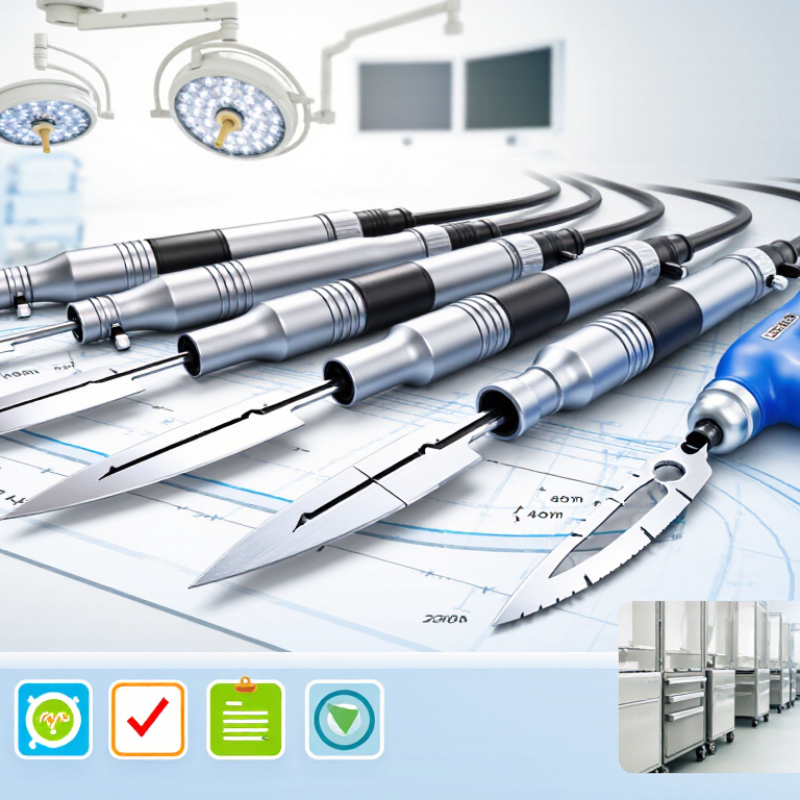
China’s optical laryngoscope industry combines precision machining, medical optics, electronics, and device assembly. Suppliers commonly produce reusable and disposable configurations for hospitals, emergency teams, and training centers. Their products may include fiber-optic blades, camera modules, LED illumination, rechargeable handles, and protective cases.
A reliable supplier should explain blade geometry, light intensity, viewing angle, and compatibility with existing monitors. Buyers should also review sterilization instructions, battery performance, sealing quality, and traceability records. ISO 13485 certification can support quality evaluation, but certification alone is not enough. Factory audits, sample testing, and production consistency matter more during practical procurement. Ask for inspection reports, material certificates, and clear service procedures.
In daily clinical use, small details become important. A stable grip helps during difficult positioning. A bright image should remain clear in blood, condensation, or low light. Packaging must protect the optical pathway from scratches and dust. Some suppliers offer strong technical documentation, while others still provide incomplete translations. This creates avoidable confusion. It is worth checking every specification twice. A sample may perform well, yet later batches can vary if process controls are weak. That possibility deserves attention before signing a long-term agreement. Suppliers with engineering teams, controlled assembly areas, and responsive after-sales support are generally easier to evaluate and manage.
China Top 10 Optical Laryngoscope Suppliers
When evaluating optical laryngoscope manufacturers, inspect more than product photographs and price lists. A reliable supplier should provide clear specifications for blade size, camera resolution, viewing angle, illumination, and battery performance. Ask for test reports, quality certificates, and traceable production records. Details matter.
Practical experience is equally important. Request a demonstration using an airway model, not only a sales presentation. Check whether the image remains sharp under limited lighting and whether the display shows a stable view during movement. Examine the handle, cable, connector, and screen for weak points. A device that feels awkward after five minutes may become tiring during clinical use.
Manufacturers should explain cleaning procedures, compatible disinfectants, warranty terms, and replacement-part availability. Confirm response times for technical support and the training provided after delivery. Independent clinical feedback can reveal problems hidden during factory testing. It is wise to compare several batches, because consistency is sometimes less impressive than a single excellent sample. No evaluation is perfect. Even experienced buyers may overlook software usability or storage conditions. A careful supplier welcomes questions, documents changes, and accepts reasonable verification before large orders. Reliability is built through evidence, not confident language.
Anonymized supplier benchmarking table based on commonly used medical-device sourcing and technical evaluation criteria
| Evaluation Position | Anonymous Supplier Profile | Optical Configuration | Typical Working Diameter | Image and Illumination Compatibility | Sterilization Compatibility | Quality-System Evidence to Request | Customization Capability | Recommended Verification Focus | Screening Score |
|---|---|---|---|---|---|---|---|---|---|
| 01 | Supplier Profile A Advanced optical portfolio | Rigid optical laryngoscope with rod-lens imaging | Approximately 8–12 mm | Eyepiece and camera-adapter options; integrated or external LED illumination | Autoclave-capable configurations available; cycle validation required | ISO 13485 certificate, risk-management file, process validation records | High: handle design, distal tip, connector, packaging | Optical resolution, image distortion, sterilization-cycle durability | 92/100 |
| 02 | Supplier Profile B Multi-size clinical range | Direct-view optical system with interchangeable sizes | Approximately 5–10 mm | Standard eyepiece; optional video coupler subject to compatibility testing | Reusable models; steam sterilization suitability must be documented | ISO 13485, ISO 14971 risk controls, incoming-inspection procedures | Medium-high: diameter, length, viewing angle, markings | Size consistency, field of view, ergonomic grip, repair turnaround | 89/100 |
| 03 | Supplier Profile C OEM-focused manufacturer | Rigid optical scope with modular camera interface | Approximately 7–11 mm | Digital camera integration and cold-light-source compatibility | Reusable systems; sterilization instructions and material data required | ISO 13485, design-control records, traceability and complaint handling | High: private labeling excluded; technical configuration supported | Camera compatibility, mechanical tolerances, software-free image output | 87/100 |
| 04 | Supplier Profile D Cost-efficient standard range | Standard rigid optical laryngoscope | Approximately 8–13 mm | Eyepiece viewing; compatible light-guide specification to be confirmed | Reusable; autoclave parameters must be supplied by the manufacturer | ISO 13485, batch inspection reports, material declarations | Medium: standard dimensions and accessories | Total landed cost, coating quality, optical alignment and warranty terms | 84/100 |
| 05 | Supplier Profile E Endoscopy accessory specialist | Optical laryngoscope supported by camera and light-source accessories | Approximately 6–12 mm | Video adapter, fiber-optic or LED illumination options | Reusable models; compatibility depends on seal and optical-material design | ISO 13485, electrical-safety documentation where applicable, usability records | Medium-high: camera mount and accessory interfaces | System interoperability, connector durability and image latency | 82/100 |
| 06 | Supplier Profile F Hospital procurement supplier | General-purpose rigid optical laryngoscope | Approximately 7–12 mm | Direct viewing with optional adapter-based imaging | Reusable; reprocessing instructions and maximum cycle count required | ISO 13485, product technical file, inspection and calibration records | Low-medium: standard catalog configurations | Availability, spare parts, training, replacement policy and delivery record | 80/100 |
| 07 | Supplier Profile G Small-batch technical producer | Compact rigid optical scope for routine procedures | Approximately 5–9 mm | Eyepiece and basic illumination interface | Reusable; confirm thermal resistance and sealing performance | ISO 13485 or equivalent quality documentation, inspection records | High for low-volume engineering changes; capacity must be assessed | Production capacity, optical consistency between batches and delivery stability | 77/100 |
| 08 | Supplier Profile H Export-oriented supplier | Rigid optical laryngoscope with export packaging options | Approximately 8–12 mm | Standard optical viewing; camera integration requires sample testing | Reusable; packaging and reprocessing labeling should be reviewed | ISO 13485, export documentation, labeling and traceability controls | Medium: packaging, documentation and accessory changes | Target-market registration support, shipping protection and document accuracy | 75/100 |
| 09 | Supplier Profile I Value-focused manufacturer | Basic rigid optical configuration | Approximately 8–13 mm | Direct viewing; limited accessory compatibility requires confirmation | Reusable models; verify cleaning chemicals and thermal-cycle limits | Quality manual, batch records, material safety and inspection evidence | Low-medium: mostly standard products | Sample inspection, coating adhesion, image clarity and post-sale support | 72/100 |
| 10 | Supplier Profile J Entry-level sourcing candidate | Standard optical laryngoscope for preliminary evaluation | Approximately 7–12 mm | Basic eyepiece viewing; illumination and camera interfaces require validation | Reprocessing suitability must be confirmed before clinical use | Certificate validity, technical documentation, complaint and recall procedures | Low: standard configuration preferred | Regulatory status, sample quality, supplier history and risk-control completeness | 69/100 |
China’s top optical laryngoscope suppliers differ in manufacturing focus and clinical experience. Supplier One specializes in reusable optical blades, with strong machining and polishing capabilities. Supplier Two develops disposable systems for hospitals seeking faster turnover and simpler reprocessing. Supplier Three focuses on compact video-assisted designs for emergency departments and ambulances.
Supplier Four offers pediatric and adult blade sizes, supported by practical airway management feedback. Supplier Five combines laryngoscopes with portable monitors, reducing equipment changes during procedures. Supplier Six is known for OEM production and flexible handle configurations. Supplier Seven emphasizes anti-fog optical pathways and clear illumination in difficult airways. Supplier Eight supplies training hospitals and provides product demonstrations for clinical teams.
Supplier Nine concentrates on battery efficiency, charging docks, and durable housing. Supplier Ten supports export documentation, private labeling, and after-sales replacement parts. These profiles should be checked against current production records, not promotional claims alone. Ask for ISO 13485 evidence, applicable market registrations, optical performance data, sterilization instructions, and warranty terms. Factory audits can reveal assembly conditions that brochures hide.
Real sourcing work also requires sample testing. Inspect image clarity, blade locking, light consistency, and cleaning access. Some suppliers respond quickly but provide incomplete technical files. That weakness matters. A lower price may also reflect shorter service support or limited clinical validation. Procurement teams should compare traceability, operator training, complaint handling, and delivery history before making a final decision.
China’s top ten optical laryngoscope suppliers serve hospitals, clinics, emergency teams, and training centers.
Their product ranges usually include rigid and flexible laryngoscopes, video systems, reusable handles, disposable blades, monitors, and carrying cases. Some suppliers also provide complete airway management kits. The range varies widely.
Technology is a major comparison point.
Common features include high-resolution CMOS cameras, adjustable LED illumination, anti-fog lenses, image recording, and compact displays. Wireless transmission is available in some models. However, connection stability deserves careful testing. A clear screen means little if the image freezes during a procedure.
Experienced buyers should check field of view, battery duration, sterilization compatibility, and replacement-part availability.
Manufacturing capability often separates reliable suppliers from simple assemblers.
Strong factories may operate CNC machining, injection molding, optical alignment, electronic testing, and controlled clean assembly. They should also maintain traceable inspections for blades, cables, batteries, and image modules. Quality systems, documented validation, and experienced technical staff improve consistency.
Still, a certificate cannot reveal every production weakness. Factory audits, sample trials, and service-response checks remain valuable.
Small details matter. A loose connector or uneven light can affect clinical confidence. Some suppliers offer impressive customization, yet their delivery control may be less mature. That limitation deserves honest review.
China Top 10 Optical Laryngoscope Suppliers
Choosing a suitable Chinese optical laryngoscope supplier requires more than comparing catalog prices. Start with clinical performance. Ask for sample images, illumination data, viewing angles, and distal-tip specifications. The image should remain clear in a moist airway. Test it under realistic conditions, not only in a showroom.
Check the supplier’s manufacturing controls and documentation. Reliable companies should provide material details, inspection records, sterilization guidance, and traceable batch information. Review quality certificates carefully, then confirm their scope and validity with independent sources. Compliance documents are useful, but they do not replace product testing or local regulatory review. Request evidence of optical alignment, cable durability, battery safety, and repeated cleaning resistance. Small details matter.
Service can decide the purchase. Ask about operator training, spare parts, warranty limits, response times, and complaint handling. A supplier with clear technical communication is usually easier to manage after delivery. Compare production capacity and lead times, especially for customized handles or connectors. The cheapest quotation may hide weak support. That mistake is expensive. A pilot order can reveal packaging damage, inconsistent image quality, or confusing instructions before a larger contract. Do not judge every supplier by polished presentations. Real performance sometimes disagrees with the brochure. A careful evaluation may take longer, but it creates stronger evidence for selecting one of China’s leading optical laryngoscope suppliers.
The chart presents a practical 100-point evaluation framework for comparing Chinese optical laryngoscope suppliers. Product safety and regulatory compliance receive the highest weighting, followed by optical performance, manufacturing quality, customization capability, delivery reliability, and after-sales support. Buyers can adjust these criteria according to their clinical, regulatory, and procurement requirements.
Copyright © 2021 United Orthopedic Corporation All Rights Reserved.
Necessary cookies are absolutely essential for the website to function properly. This category only includes cookies that ensures basic functionalities and security features of the website. These cookies do not store any personal information.
Any cookies that may not be particularly necessary for the website to function and is used specifically to collect user personal data via analytics, ads, other embedded contents are termed as non-necessary cookies. It is mandatory to procure user consent prior to running these cookies on your website.