Choosing a reliable Self Adhesive Bandage manufacturer in China takes more than comparing catalog prices. Buyers should assess material options, product consistency, production capacity, and communication before making a decision. Small differences matter. A bandage should stay in place during movement, unwind smoothly, and feel comfortable against the skin. These details can affect clinics, sports teams, distributors, and everyday first-aid users. Needs vary, though. A cohesive elastic wrap is not interchangeable with every adhesive-style bandage, so product specifications deserve careful review.
This guide introduces ten manufacturers for buyers seeking a clearer starting point. It considers practical factors such as available widths, colors, packaging options, sample quality, and responsiveness to technical questions. A list alone cannot prove that a supplier is the right fit. The ranking should be treated as a comparison, not a universal verdict. Requesting samples can reveal issues that a brochure may not show, such as uneven stretch or fraying edges. Buyers should also confirm current quality documentation and production details directly with each company. Not every promising supplier will suit every order. That is worth remembering. A careful review of product use, order requirements, and after-sales support can make the selection process more dependable, even if it takes longer than expected.
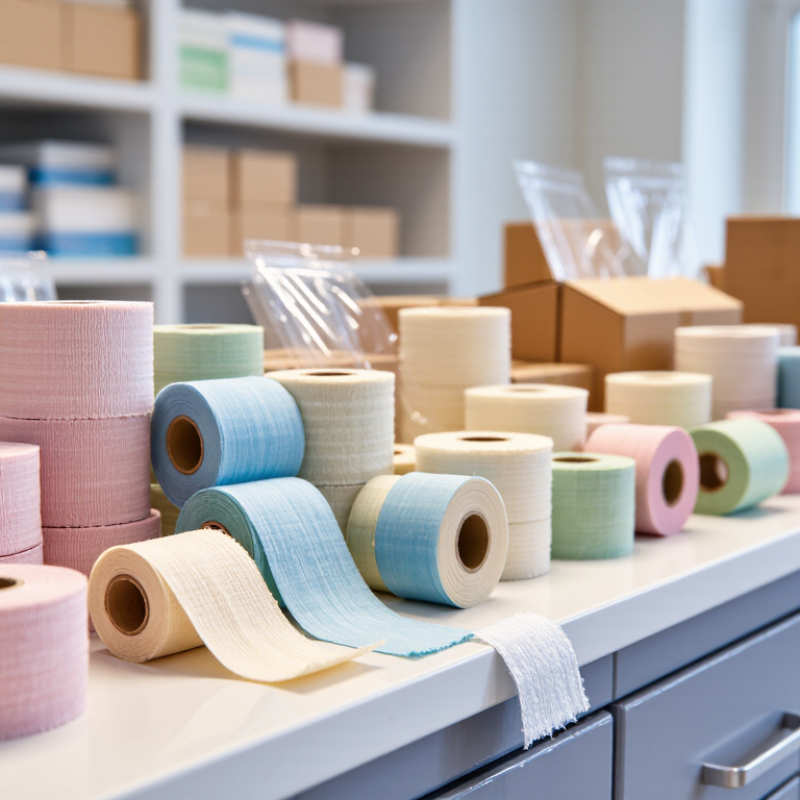
Self-adhesive bandages are elastic wraps that cling to themselves, not to skin or hair. Their fibers create friction when layers overlap, helping the wrap stay in place without clips. Some versions also contain cohesive coatings that make the layers grip. They are commonly used to support a sprain, hold a dressing, or provide light compression. They are not all the same. Stretch, width, and applied tension affect how firmly they support an area.
The practical detail matters. Wrap a wrist, and each turn should overlap smoothly without pulling hard. Excessive tension can cause discomfort or restrict circulation; loosen the wrap if fingers become cold, numb, or discolored.
The International Diabetes Federation’s 2021 Diabetes Atlas estimated that 537 million adults aged 20–79 were living with diabetes worldwide. That figure is a reminder that skin protection deserves care, especially for people with reduced sensation.
A bandage can secure a dressing, but it does not replace wound assessment. Easy to miss. Application pressure is difficult to judge by sight alone, so users should check comfort and skin color regularly.
China’s self-adhesive bandage manufacturing landscape includes large-scale converters and smaller specialist factories. Production may combine elastic or nonwoven backing, pressure-sensitive adhesive, release liners, slitting, and roll packaging. These steps need steady tension control; uneven winding can make a bandage difficult to apply. Suppliers serve healthcare, sports-care, and distribution markets, but capabilities vary by product type and order size. Coastal industrial regions offer dense supplier networks, though location alone does not prove quality.
For buyers, useful evidence includes material specifications, batch traceability, adhesive performance records, and clear sampling procedures. Ask how the factory checks adhesion after storage and tests products on curved, moving areas. A neat sample is not enough. Review edge lift, stretch recovery, residue, and comfort during removal. Documentation can vary, and gaps deserve follow-up rather than assumptions. Performance also depends on skin condition, application technique, and intended use, so assess more than price or catalog claims.
Tips: Request samples from the intended production line, not just a showroom set. Compare rolls under consistent conditions, record defects, and confirm packaging details before a larger order. Keep questions specific.
Self-adhesive bandages are typically made by preparing a stretchable fabric or nonwoven substrate, applying and curing adhesive, adding a release liner when required, then converting and inspecting the finished rolls. The chart values show workflow order only; they do not represent production volumes, market share, or manufacturer rankings.
A credible assessment of Chinese self-adhesive bandage manufacturers should begin with product consistency, not a polished catalogue. Request samples from different production batches and compare width, stretch, edge finish, and adhesion. Check whether the bandage stays in place during movement but can be removed without excessive discomfort. Small differences matter.
Ask how the manufacturer controls incoming materials, production conditions, and finished-product inspection. Clear batch records and traceable test results make quality claims easier to verify. Useful checks may include tensile strength, adhesive performance, packaging integrity, and skin-contact safety documentation. A certificate alone is not enough; confirm its scope and validity with the issuing body. Details count.
Production capability is another practical criterion. Review stated output against actual lead times, minimum order quantities, and the ability to handle repeat orders. Ask who manages quality issues and how complaints are documented. A fast reply is helpful, but a specific answer is better. Arrange an independent factory audit when possible, and compare responses across several suppliers. No checklist catches everything; samples and paperwork can still leave questions, so keep records of what was checked and what remains uncertain.
Profiles of ten Chinese self-adhesive bandage manufacturers are most useful when they show more than factory size. Compare fabric construction, cohesion, stretch recovery, edge fraying, and packaging options. A strong profile explains whether products use knitted, woven, or nonwoven materials and how samples perform under tension. Not every neat catalog tells the whole story.
Grand View Research’s Wound Care Market Size, Share & Trends Analysis Report estimated the global wound-care market at about US$20.7 billion in 2022, with a 4.1% compound annual growth rate forecast for 2023–2030. This covers wound care broadly, not self-adhesive bandages alone. It offers market context, not a promise of export demand. Keep that distinction clear.
For each supplier, check material specifications, batch traceability, tensile consistency, and skin-contact assessment. Request dated test reports and samples from routine production, not only showcase rolls. Compare stated dimensions and elongation across batches. Small inconsistencies matter. Public profiles rarely disclose defect rates or process changes, so capability claims need verification. Treat the ten profiles as a starting point, not an audited ranking.
Comparing Product Range, Quality, and Export Capabilities
When comparing Chinese manufacturers, look beyond catalogue size. Check widths, roll lengths, skin-contact materials, cohesive options, and packaging formats. A broad range matters only when specifications remain consistent between batches. Grand View Research valued the global wound care market at USD 21.4 billion in 2023 and forecast 4.4% annual growth from 2024 to 2030. This figure covers wound care broadly, not adhesive bandages alone. Small details matter.
Quality checks should include adhesion after movement, tear resistance, breathability, and residue after removal. Request product specifications, batch traceability, and relevant quality-system documentation. Then compare samples under the same conditions, such as wrapping a wrist and checking whether edges lift after several hours. A polished catalogue can still hide uneven adhesive performance. Export capability also deserves scrutiny: confirm lead times, carton dimensions, labeling languages, and experience preparing consistent shipping documents.
Tips: Ask for samples from more than one production batch. Check the carton. Compare actual roll length with the stated specification, and clarify how defects are handled. A low quotation may not reflect the full cost of packaging, transport, or delayed delivery. Keep written specifications; verbal promises are easy to misremember.
Copyright © 2021 United Orthopedic Corporation All Rights Reserved.
Necessary cookies are absolutely essential for the website to function properly. This category only includes cookies that ensures basic functionalities and security features of the website. These cookies do not store any personal information.
Any cookies that may not be particularly necessary for the website to function and is used specifically to collect user personal data via analytics, ads, other embedded contents are termed as non-necessary cookies. It is mandatory to procure user consent prior to running these cookies on your website.