Choosing the top dismantling joint suppliers worldwide requires more than comparing catalog prices. These components support pipeline installation, maintenance, and future removal around valves, pumps, and flanged equipment. A dependable supplier should demonstrate consistent dimensions, controlled materials, accurate machining, and documented pressure testing.
This guide examines manufacturers through practical engineering criteria. We consider ductile iron, carbon steel, and stainless steel options. We also review flange drilling, sealing systems, allowable movement, corrosion protection, and pressure ratings. Independent certifications can strengthen confidence, but certificates alone do not prove field performance. Production records and traceable inspection reports matter too.
Real projects reveal important details. During installation, a dismantling joint should allow technicians to adjust flange gaps without forcing expensive equipment into alignment. Clear assembly instructions can prevent damaged gaskets and uneven bolt loading. Responsive technical support also matters when a shipment reaches a remote water-treatment site with unexpected pipe dimensions. Lead time, spare parts, export packaging, and after-sales assistance may influence the final decision more than a small price difference.
There is no universal winner. Supplier rankings can change by region, application, and project scale. Public information is often incomplete, and marketing claims require careful verification. This review therefore compares established names using evidence, not popularity alone. It highlights companies with credible manufacturing experience, recognized quality systems, and a record of serving demanding infrastructure projects. Readers should still confirm current specifications directly before selecting a dismantling joint for critical service. That final check is easy to overlook.
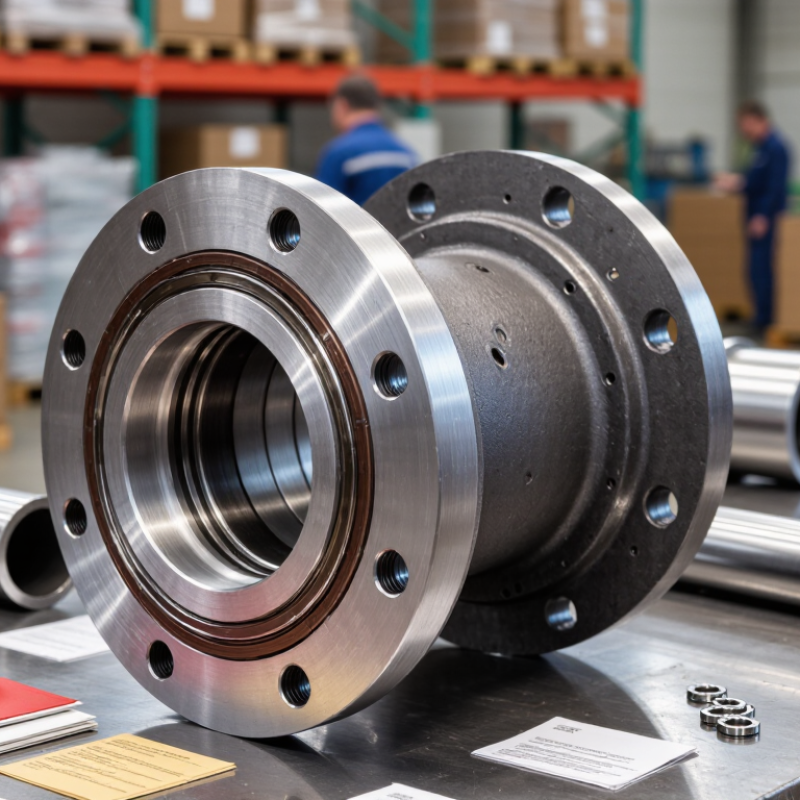
A dismantling joint connects flanged pipes, valves, and pumps while allowing controlled axial adjustment. Its sleeve, flange rings, gasket, and tie rods create a removable assembly. DN50–DN4000 covers small distribution lines and large transmission pipelines. PN10–PN40 indicates nominal pressure classes, not guaranteed operating pressure under every temperature.
The correct selection requires more than size matching. Engineers should verify flange drilling, face dimensions, gasket compatibility, bolt material, coating thickness, and allowable axial movement. EN 14525 and related flange standards provide useful reference points. The WHO and UNICEF Joint Monitoring Programme reported that 2.2 billion people lacked safely managed drinking water in 2022. This pressure increases the need for maintainable water infrastructure.
Leading suppliers usually provide traceable steel certificates, dimensional inspection, pressure-test records, and documented corrosion protection. A supplier’s DN4000 claim still needs practical evidence, such as transport planning and site assembly experience. The Global Water Intelligence market outlook continues to identify network renewal as a major utility investment area. Yet a catalog can look complete and still hide a mismatch. One overlooked flange detail may delay an entire shutdown project.
When evaluating top dismantling joint suppliers worldwide, buyers should examine compliance before production capacity. EN 14525 covers wide-tolerance couplings, flange adaptors, and dismantling joints for water pipelines. It addresses dimensions, pressure performance, materials, and testing. However, EN 14525 certification alone does not prove reliable installation.
ISO 9001 governs the supplier’s quality management system, not the joint’s technical design. The ISO Survey 2022 recorded about 1.26 million ISO 9001 certificates across 189 countries and economies. That scale shows its value, but a certificate can still hide weak traceability. Ask for batch records, coating inspection results, pressure-test reports, and corrective-action evidence. Small details matter, especially around flange bolts and sealing faces.
AWWA C219 focuses on bolted, sleeve-type couplings for plain-end pipe. It is widely referenced in North American water projects, while EN 14525 is common in European specifications. The standards are not interchangeable without checking design conditions. The U.S. Environmental Protection Agency’s 7th Drinking Water Infrastructure Needs Survey estimates $625 billion in investment needs over 20 years. Aging networks demand joints that tolerate field movement, not just laboratory pressure. Supplier comparisons should include installation clearances, restraint behavior, corrosion protection, and documented testing. I would also question unusually broad claims. A polished datasheet is not field experience.
Standards-based comparison framework for evaluating dismantling joint suppliers without ranking or identifying individual companies.
| Evaluation Dimension | EN 14525 | ISO 9001 | AWWA C219 | Supplier Evidence to Request |
|---|---|---|---|---|
| Standard category | European product standard | Quality management system standard | American Water Works Association product standard | Applicable certificates, declarations, and current revision references |
| Primary scope | Wide-tolerance couplings and flange adaptors for pipes of different materials, including dismantling-type applications | Requirements for establishing, implementing, maintaining, and continually improving a quality management system | Bolted, sleeve-type couplings for joining plain-end pipe | Product scope statement confirming that the proposed joint matches the intended pipe connection |
| Typical application | Water transmission, distribution, and buried pipeline connections using compatible pipe materials | Manufacturing and supply controls for pipeline components and related services | Waterworks systems using plain-end pipe and bolted sleeve-type coupling arrangements | Reference projects, installation instructions, and application limits |
| Design information to verify | Nominal size, outside-diameter range, pressure class, flange drilling, allowable angular deflection, and axial restraint requirements | Documented design review, change control, inspection planning, and nonconformity controls | Pipe outside diameter, sleeve dimensions, bolt arrangement, gasket compatibility, and service pressure requirements | Certified dimensional drawings and a project-specific selection schedule |
| Materials and corrosion protection | Material selection, protective coating, fasteners, and elastomer compatibility must be suitable for the specified service environment | Material traceability and controlled purchasing processes should be maintained within the quality system | Material and coating requirements are selected according to the applicable product specification and waterworks service conditions | Material certificates, coating data sheets, elastomer compliance documents, and corrosion-protection test reports |
| Testing and inspection | Verification should address dimensional conformity, sealing performance, pressure resistance, and other applicable type or routine tests | Requires controlled monitoring, measurement, analysis, evaluation, and documented improvement processes | Testing and inspection are performed against the requirements of the applicable coupling specification and purchase documents | Test reports identifying sample size, test method, pressure or load, acceptance criteria, and date |
| Quality certification meaning | Indicates conformity with relevant product requirements when supported by the appropriate conformity assessment documentation | Confirms that an organization operates a quality management system; it does not by itself certify a specific dismantling joint design | Demonstrates alignment with the applicable AWWA product requirements when the product and documentation are within scope | Certificate scope, issuing body, validity period, manufacturing location, and product identification |
| Installation and maintenance | Installation must follow the manufacturer’s instructions for pipe preparation, bolt tightening, gasket positioning, and allowable movement | Supports controlled work instructions, training, inspection records, and corrective-action procedures | Installation should follow the product instructions and project requirements for plain-end pipe coupling assembly | Installation manual, tightening sequence, torque guidance where applicable, and field support process |
| Best use in supplier comparison | Assess European-market product suitability and dimensional or performance conformity | Assess the supplier’s process consistency, traceability, corrective action, and continual-improvement controls | Assess suitability for projects specifying AWWA requirements and plain-end pipe coupling applications | Use a weighted technical-commercial scorecard rather than relying on certification alone |
| Important limitation | Conformity to a European standard does not automatically establish compliance with every local project specification | ISO 9001 certification is not a substitute for product testing, dimensional verification, or project-specific approval | AWWA C219 applicability must be checked against the pipe type, joint configuration, pressure, and authority requirements | Obtain approval from the project engineer or utility authority before final procurement |
European dismantling joint suppliers are known for careful engineering and strict production controls. Many serve municipal water, wastewater, and industrial pipeline projects. Their products often support EN and ISO requirements, with adjustable flanged connections and corrosion-resistant coatings. Experienced buyers check flange drilling, pressure ratings, tie-rod strength, and sealing performance. A polished catalog is not enough.
Asian suppliers cover a broad range of projects, from compact water networks to large infrastructure systems. Leading manufacturers often offer flexible dimensions, ductile iron bodies, stainless steel hardware, and protective epoxy coatings. Some provide testing reports for hydrostatic pressure, material composition, and coating thickness. Factory visits can reveal practical details, including machining accuracy and storage conditions. Quality may vary between suppliers.
North American suppliers commonly focus on dependable field installation and compatibility with regional flange standards. Their dismantling joints often include restrained designs, clear adjustment ranges, and replaceable sealing components. Contractors value prompt technical support, accurate drawings, and reliable delivery schedules. Supplier evaluation should include installation records, third-party certifications, warranty terms, and response quality after delivery. No supplier is perfect. Even strong manufacturers can miss a project-specific detail when communication is incomplete.
What Are the Top Dismantling Joint Suppliers Worldwide?
Supplier quality is easier to judge through engineering evidence than polished catalogs. The main comparison starts with materials. Ductile iron offers strength and dimensional stability, while stainless steel improves resistance in aggressive water environments. Carbon steel can perform well, but its protection depends heavily on surface preparation and coating thickness. According to the NACE IMPACT study, corrosion costs reached about US$2.5 trillion globally, equal to roughly 3.4% of worldwide GDP. That figure makes coating selection a practical cost issue, not a cosmetic detail.
Coatings should match soil, water, and installation conditions. Fusion-bonded epoxy is widely selected for buried components, but application control remains critical. ISO 12944 classifies exposure severity, helping buyers compare corrosion protection more consistently. Suppliers should provide holiday-testing records, coating thickness data, and adhesion results. Evidence matters more. A coating that looks smooth may still fail around bolt holes or flange edges.
Seals deserve equal attention. EPDM is commonly preferred for potable water and weather resistance, while NBR can suit oil-contaminated environments. EN 681-1 provides performance requirements for elastomeric seals, but actual service life also depends on temperature, pressure, chemicals, and joint movement. Many suppliers suggest long operating lives, yet independent testing is not always comparable. I would examine compression-set results, accelerated-aging data, and replacement access. Small details decide life. A realistic service-life estimate should include maintenance conditions, not only laboratory performance.
When comparing dismantling joint suppliers worldwide, selection data deserves more attention than polished catalogs. In field inspections, pressure class is often the first practical filter. It must match the pipeline’s maximum working pressure, test pressure, and temperature. A joint rated only for normal operation may fail during surges. Ask suppliers for tested pressure records, design standards, and material certificates. Experience matters here. Some documents look complete but omit cycle testing or bolt-load assumptions.
Flange drilling is equally important. Confirm flange diameter, bolt-hole count, pitch-circle diameter, and facing type before ordering. A small mismatch can delay installation or force unsafe field modifications. Reliable suppliers provide dimensional drawings and inspection reports, not vague compatibility claims. Check whether the joint allows enough axial adjustment for the actual gap. Site measurements can be imperfect, especially around old valves. That uncertainty should be recorded, not hidden.
Tips: Compare at least three technical offers using the same data sheet. Request corrosion-resistance details for the fluid, soil, and external atmosphere. Stainless components may help, but coating thickness, gasket material, and bolt protection also matter. Ask for salt-spray or immersion evidence when exposure is severe. Do not treat “corrosion resistant” as a complete specification. I have seen projects overfocus on body material and overlook buried bolt corrosion. That is an avoidable lesson, though not always an obvious one. Before approval, have an independent engineer review pressure, drilling, movement, and maintenance access together.
Copyright © 2021 United Orthopedic Corporation All Rights Reserved.
Necessary cookies are absolutely essential for the website to function properly. This category only includes cookies that ensures basic functionalities and security features of the website. These cookies do not store any personal information.
Any cookies that may not be particularly necessary for the website to function and is used specifically to collect user personal data via analytics, ads, other embedded contents are termed as non-necessary cookies. It is mandatory to procure user consent prior to running these cookies on your website.