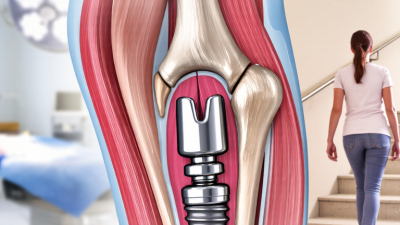
Choosing an orthopedic implant is a long-term decision, not simply a choice between metal and plastic. Hip, knee, shoulder, and spinal implants serve different purposes and face different forces inside the body. Their materials, design, fit, and placement can all affect performance over time. No implant works equally well for every patient.
This guide explores orthopedic implant durability through the features that matter in practice. It compares common options, including titanium alloys, cobalt-chromium alloys, ceramics, and medical-grade polyethylene. It also considers how activity level, bone quality, overall health, and surgical technique may influence wear or the need for revision. The details matter. A hard-wearing material alone cannot guarantee a long-lasting result.
Durability is not a simple ranking. Evidence from clinical studies and long-term follow-up can help explain how implants perform, but results vary across patient groups and implant designs. Some comparisons remain difficult because devices, surgical methods, and follow-up periods differ. That uncertainty deserves attention. Patients should discuss relevant risks and expected benefits with an orthopedic specialist who understands their diagnosis and medical history. The aim is not to promise a specific lifespan, but to clarify the trade-offs behind each option and support an informed conversation.
Top Orthopedic Implant Types for Long-Term Durability?
Durability is not simply how long an implant remains in place. A useful measure is revision-free survival: the proportion of implants not replaced or revised over a defined period. Hip and knee implants are commonly assessed this way, but their results should not be compared without context. A ten-year figure means little unless the population, follow-up, and definition of revision are clear.
Joint registries track outcomes across many patients and can reveal patterns that a single clinic may miss. They may compare implant designs, fixation methods, and patient groups over time. However, registry data can be incomplete, and patients’ age, activity, health, and surgical circumstances affect results. That matters. “Revision-free” also does not mean pain-free or complication-free. Even strong data leave some uncertainty.
Tips: Check the follow-up period and number of patients behind a survival estimate. Ask whether the registry counts partial as well as complete revisions. Discuss how your health, bone quality, and daily activities may influence implant choice. Evidence helps guide a decision, but no implant type guarantees the same lifespan for everyone.
Durability measured as estimated revision-free survival at 25 years
In a published analysis of long-term registry data, estimated 25-year revision-free survival was 58.4% for total hip replacement and 82.3% for total knee replacement. These are population-level estimates; outcomes vary with patient characteristics, implant design, and surgical factors. Revision-free survival does not measure pain relief or overall function.
Source: Evans et al., The Lancet (2019), “How long does a hip or knee replacement last?” DOI: 10.1016/S0140-6736(19)32531-5.
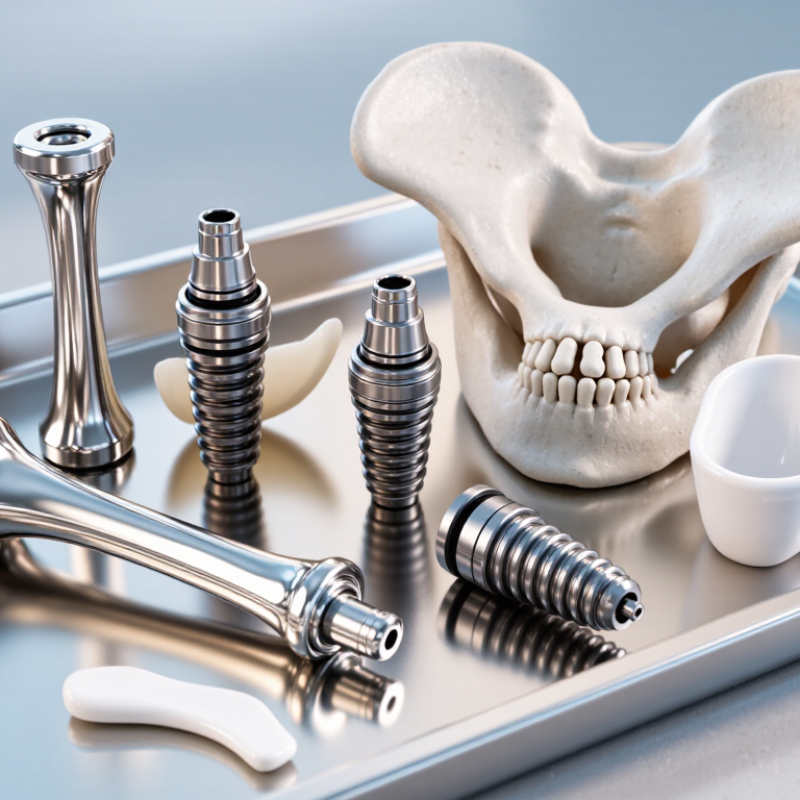
Material choice affects strength, wear, and how an implant behaves inside the body. Titanium alloys are often used for components that need strength and bone compatibility. Cobalt-chromium alloys resist surface wear, while ceramic surfaces can reduce friction in some joint designs. Each has trade-offs. No material wins every test. Patient anatomy, activity, and surgical technique also influence outcomes.
Fixation describes how an implant stays in place. Cemented fixation uses bone cement to secure components; cementless designs rely on bone growing onto a textured surface. Hybrid fixation combines approaches. The best option depends on bone quality and the joint being replaced. Bearing surfaces matter, too: common combinations include ceramic or metal against polyethylene. Wear can vary with alignment, movement, and loading. A small detail, such as how a person walks, may affect stresses over time.
Tips: Ask your orthopedic surgeon which material, fixation method, and bearing surface fit your bone health and daily activities. Request a plain-language explanation of expected benefits and limitations. Bring questions about recovery and follow-up. Durability is not a guarantee, and the trade-offs can be easy to overlook.
For long-term durability, the key measure is revision-free survival: whether an implant has avoided replacement surgery. A 2019 Lancet systematic review estimated that 58.4% of total hip replacements remained unrevised at 25 years, based on national joint-registry data (95% confidence interval: 57.3%–59.5%). In practical terms, about six in ten had not undergone revision by that point. That distinction matters. It does not mean every unrevised hip was pain-free, or that every patient can expect the same result.
The estimate combines outcomes across different implant designs, patients, and surgical eras. Registry reports, such as those published by the Australian Orthopaedic Association National Joint Replacement Registry, help track revisions over time, but population averages cannot predict an individual outcome. Age, bone quality, activity, and the reason for surgery all matter. So do changes in materials and surgical practice. A decades-old result is useful context, not a precise forecast for a modern implant. That uncertainty is easy to overlook. Discussing expected benefits, possible wear, and follow-up plans with an orthopedic surgeon can make the number more meaningful.
A 2019 Lancet review estimated that 82.3% of total knee implants remained unrevised 25 years after surgery. In practical terms, about eight in ten had not required replacement by that point. This is a substantial durability milestone. It is not a promise that any one implant will last 25 years.
“Survival” can sound like a perfect result. Here, it generally refers to avoiding revision surgery, not having no pain or stiffness. A person may still need follow-up care while their implant remains in place. The estimate also combines evidence from many patients and cannot capture every difference in age, activity, health, or surgical circumstances.
That distinction matters. A steady walk through a grocery aisle and a demanding hike place different expectations on a knee. Implant choice, surgical technique, and rehabilitation all deserve individual discussion with an orthopedic specialist. The review offers useful long-term context, but population averages have limits. They can reassure, yet they cannot predict one person’s outcome. Medical evidence is helpful, not flawless.
Implant longevity depends on design, surgical fit, and the condition being treated—not just the material. In the shoulder, an anatomic replacement is generally considered when the rotator cuff can support normal joint mechanics. A reverse design may be considered when the cuff is severely damaged. The choice affects how forces travel through the joint. Years of overhead work, bone quality, and rehabilitation also matter. No implant lasts forever.
Spine implants serve different purposes. Screws and rods can hold vertebrae steady while fusion develops; artificial discs aim to preserve motion in selected patients. These options are not interchangeable. The diagnosis, bone health, number of treated levels, and daily loads all shape expected durability. A well-chosen device can still face wear, loosening, or stress at nearby levels. That distinction can sound neat on paper; real cases are messier. Longevity estimates are not guarantees.
Tips: Ask which design fits your diagnosis and why. Discuss realistic activity limits, follow-up imaging, and warning signs such as new weakness or worsening pain. Bring questions about bone health and rehabilitation, too. A second opinion may help when the proposed procedure or expected lifespan remains unclear.
| Implant type | Typical design and materials | Common clinical indication | Long-term durability profile | Common durability concerns | Clinical factors that influence longevity |
|---|---|---|---|---|---|
| Anatomic total shoulder arthroplasty | A metal humeral head articulates with a polyethylene glenoid component; the rotator cuff is retained. | Primary glenohumeral osteoarthritis when the rotator cuff is functional and glenoid bone stock is adequate. | Many long-term series report approximately 90% or higher implant survival at 10 years, although results vary by patient group, implant design, and definition of revision or failure. | Polyethylene glenoid wear or loosening; rotator cuff failure; instability; infection. | Rotator-cuff integrity, glenoid bone quality, activity level, age, and correct component positioning. |
| Reverse total shoulder arthroplasty | Reverses the joint geometry: a metal glenosphere is fixed to the scapula, and a polyethylene cup is placed on the humeral side. | Rotator-cuff-deficient arthritis, some complex proximal humerus fractures, and selected revision cases. | Long-term studies show durable pain and function improvement for many patients. Reported 10-year survival is commonly around 85–90% or higher in some series, but estimates differ across populations and follow-up methods. | Instability, infection, scapular notching, acromial stress fracture, and loosening of the glenoid baseplate or other components. | Scapular bone stock, deltoid function, implant positioning, prior surgery, fracture indication, and patient activity. |
| Shoulder hemiarthroplasty | A metal humeral head replaces the humeral joint surface; the native glenoid is left in place. | Selected fracture cases or situations where replacing the glenoid is unsuitable; use for primary shoulder arthritis is more selective than in the past. | The metal component may remain intact, but long-term pain relief can be limited by changes to the native glenoid. Outcomes are not directly comparable with total shoulder replacement. | Glenoid erosion, persistent pain, stiffness, and later conversion to a total shoulder replacement. | Underlying diagnosis, fracture healing, rotator-cuff function, glenoid condition, and the patient’s age and activity demands. |
| Spinal fusion with screws, rods, and/or an interbody cage | Titanium-alloy or other metal screws and rods stabilize the spine; an interbody cage may be made from polymer or metal and may contain bone graft material. | Selected cases of instability, deformity, fracture, or degenerative disease where fusion is clinically appropriate. | There is no single lifespan estimate for fusion hardware. The construct is generally intended to support healing; after a solid fusion, it may remain in place long term. Hardware survival is not the same as symptom-free spinal health. | Nonunion (pseudarthrosis), screw loosening or breakage, cage subsidence, infection, and degeneration at neighboring spinal levels. | Bone quality, smoking, diabetes, number of levels fused, surgical technique, alignment, and adherence to recovery guidance. |
| Anterior cervical discectomy and fusion (ACDF) implants | A cage or graft spacer, sometimes combined with a plate and screws, supports fusion across a cervical disc space. | Selected cervical disc herniation or degenerative disease causing nerve-root or spinal-cord symptoms. | Successful fusion can provide lasting stability. Long-term outcomes depend on both fusion and the condition of adjacent levels; there is no universal hardware lifespan. | Nonunion, cage subsidence, plate or screw problems, swallowing symptoms, and adjacent-segment disease. | Number of levels treated, bone health, smoking, alignment, and pre-existing degeneration above or below the treated level. |
| Cervical artificial disc replacement | A motion-preserving device commonly uses metal endplates with a polymer bearing; specific designs vary. | Carefully selected patients with symptomatic cervical disc disease, suitable anatomy, and no contraindication to motion preservation. | Long-term studies report maintained motion and sustained clinical benefit in selected patients. Durability depends on device design and patient selection; results should not be generalized to every case. | Wear or loosening, device migration, heterotopic bone formation that restricts motion, and the possibility of later revision. | Facet-joint health, bone quality, spinal alignment, number of treated levels, and accurate device positioning. |
| Lumbar artificial disc replacement | A motion-preserving implant commonly combines metal endplates with a polymer bearing surface. | Selected patients with symptomatic lumbar disc degeneration, appropriate bone quality, and suitable facet joints and spinal alignment. | Long-term cohorts show that benefit can be sustained for appropriately selected patients. There is no single expected service life that applies across devices and patient groups. | Wear, loosening, migration, heterotopic ossification, facet-joint pain, and technically complex revision surgery. | Facet condition, bone density, spinal alignment, activity, device placement, and careful exclusion of unsuitable candidates. |
Note: Longevity figures are broad summaries of published long-term cohorts, not guarantees or direct head-to-head comparisons. Revision rates, implant survival definitions, follow-up duration, patient selection, and clinical outcomes vary. Implant choice should be based on an individual assessment by a qualified orthopedic or spine specialist.
Copyright © 2021 United Orthopedic Corporation All Rights Reserved.
Necessary cookies are absolutely essential for the website to function properly. This category only includes cookies that ensures basic functionalities and security features of the website. These cookies do not store any personal information.
Any cookies that may not be particularly necessary for the website to function and is used specifically to collect user personal data via analytics, ads, other embedded contents are termed as non-necessary cookies. It is mandatory to procure user consent prior to running these cookies on your website.