What Is Alpha Arbutin Powder and How Is It Used
Alpha Arbutin Powder is a refined cosmetic ingredient used in brightening and uneven-tone formulations. It is a water-soluble derivative of hydroquinone, but it has a different safety and regulatory profile. In a finished product, alpha arbutin may help reduce the appearance of dark spots by slowing tyrosinase activity. Tyrosinase plays a central role in melanin production. Cosmetic science educator Michelle Wong explains, “Arbutin works by inhibiting tyrosinase, which helps reduce melanin production.” The mechanism sounds simple. Skin biology is not.
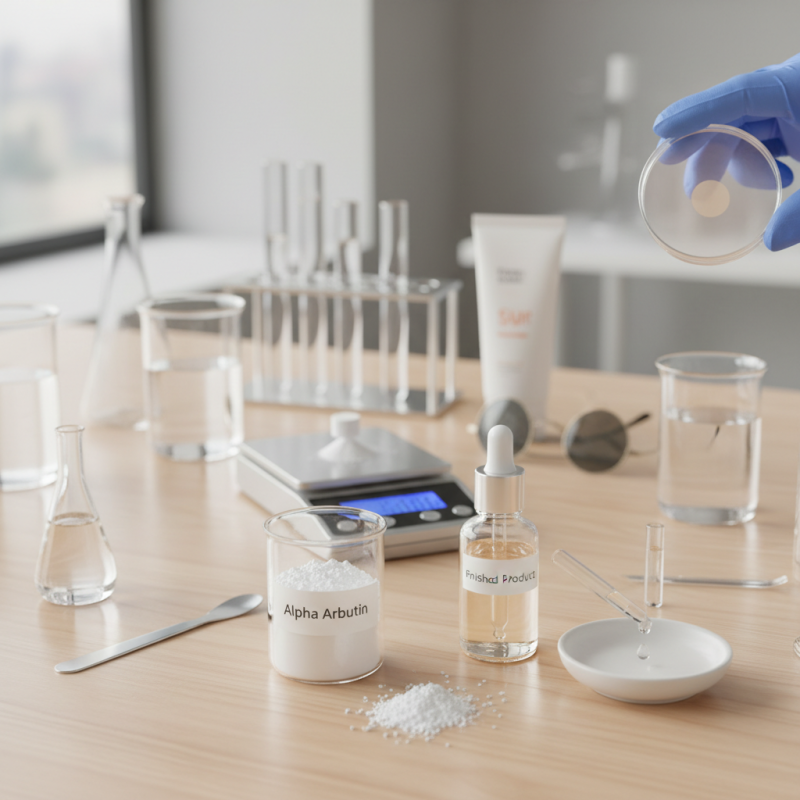
Manufacturers usually dissolve Alpha Arbutin Powder in the water phase of a serum, lotion, or cream. Accurate weighing matters. Excess heat, unsuitable pH, light, or poor storage can weaken the formula. A professional formulator should review supplier specifications, purity data, stability results, and microbial controls. A certificate of analysis is useful, but it is not the whole story. The final product still needs proper testing.
Consumers should not apply raw powder directly to facial skin. That shortcut can create uneven dosing, irritation, or contamination. A finished formula is more reliable. Patch testing remains sensible, especially for reactive skin. Results are gradual, and sunscreen is essential during daily use. Alpha Arbutin Powder is not a magic eraser. I would question any claim promising instant perfection. Real skin has texture, pores, old marks, and changing light. Product performance also depends on concentration, formulation quality, consistent use, and individual response. Regional cosmetic rules may differ, so brands must verify current requirements before marketing products.
What Is Alpha Arbutin Powder?
What Is Alpha Arbutin Powder?
Alpha arbutin powder is a refined cosmetic ingredient used in formulas designed to improve uneven-looking skin tone. It is a glycosylated form of hydroquinone, but it has a different chemical structure and cosmetic profile. The powder is usually fine, white, and water-soluble. It works by moderating tyrosinase activity, an enzyme involved in melanin production. This does not make it an instant whitening ingredient. Results are usually gradual and vary between individuals.
In practical formulation work, alpha arbutin is commonly dissolved in water-based products, such as serums, lotions, and creams. Heat, strong light, and unsuitable pH conditions may reduce its stability. For this reason, formulators check the ingredient’s purity, storage conditions, and compatibility with other components. Directly applying the raw powder is not a sensible shortcut. It may irritate the skin and distribute unevenly. I have found that simple formulas are easier to monitor, although “simple” does not always mean risk-free.
Tips: Use a properly prepared cosmetic formula rather than loose powder. Patch-test a small area first. Store the powder in a cool, dry, light-protected place. Follow the supplier’s usage guidance and avoid guessing concentrations. Stop using the product if persistent redness, burning, or swelling develops. Evidence for cosmetic ingredients can be overstated online, so realistic expectations matter. Skin tone changes are not always caused by one factor, and alpha arbutin cannot correct every discoloration.
Common Uses in Skincare Formulations
What Is Alpha Arbutin Powder and How Is It Used
Common Uses in Skincare Formulations
Alpha arbutin powder is a water-soluble skin-conditioning ingredient derived from hydroquinone glycosides. Formulators commonly use it in brightening serums, facial creams, lotions, and targeted tone-care products. It helps reduce the appearance of uneven pigmentation by influencing tyrosinase activity. Results are gradual, not dramatic overnight.
Small details matter. A typical formulation may use 0.2% to 2% alpha arbutin, depending on the product type and regional requirements. The European Commission’s Scientific Committee on Consumer Safety assessed alpha-arbutin as safe up to 2% in face creams and 0.5% in body lotions under stated conditions. Formulators usually add the powder to the water phase, control pH, and limit excessive heating. Opaque packaging can also reduce unnecessary light exposure.
It needs patience.
Industry ingredient reports and technical evaluations repeatedly emphasize stability testing before commercial production. A serum may look clear on day one, then change color after weeks of heat and light. That is why compatibility tests, preservative checks, and real-time storage studies are essential. I would not describe alpha arbutin as a miracle ingredient. Its performance depends on concentration, delivery system, formulation stability, and consistent application. Even careful formulas can disappoint when consumer expectations become unrealistic.
Alpha arbutin is a water-soluble skin-brightening ingredient commonly used in serums, creams, lotions, and masks. The chart shows practical formulation ranges commonly cited for these product formats. Actual use levels depend on the complete formula, stability testing, local regulations, and supplier specifications.
Storage, Quality, and Potential Side Effects
Alpha arbutin powder is a water-soluble cosmetic ingredient used to support a more even-looking skin tone. Its performance depends heavily on handling. Store the powder in a tightly sealed, opaque container. Keep it dry. A cool cabinet is usually better than a humid bathroom. Heat, light, and repeated exposure to air may reduce its quality over time. Always check the supplier’s storage instructions, batch number, expiry date, and certificate of analysis.
Good-quality powder should have a consistent appearance and a clear identity record. Professional checks may include purity, assay results, microbial limits, and heavy-metal testing. The powder should not smell strongly, form damp clumps, or change color unexpectedly. These signs do not prove contamination, but they deserve investigation. I would avoid guessing. Ask for updated documentation before using questionable material.
During formulation, dissolve alpha arbutin in the water phase under controlled conditions. Avoid excessive heat and follow the recommended concentration and pH range from a qualified supplier or formulator. Wear gloves and avoid breathing loose powder. Patch test the finished product first. Some users may experience redness, itching, dryness, or stinging, especially with sensitive skin. Stop use if irritation continues. Do not apply it to broken skin or combine it casually with several strong exfoliating products. A careful formula is not automatically risk-free. Temperature, pH, packaging, and personal tolerance can all change the result.