
Industrial filtration demands more than a material that simply blocks visible particles. It requires controlled airflow, stable structure, dependable capture, and practical manufacturing performance. Filter Nonwoven Fabric supports these needs through engineered fibers, calibrated pore networks, and adaptable layer designs. Its fibers can be arranged through spunbond, meltblown, needle-punched, or composite processes. Each method creates different filtration behavior.
Dr. Behnam Pourdeyhimi, a respected nonwovens researcher and executive director of The Nonwovens Institute, has described the broader value of nonwovens this way: “Nonwovens are used in products that make life better, safer, and healthier.” His statement reflects an important industrial principle. Filtration materials must perform consistently in real operating conditions. They may face dust loading, humidity, vibration, chemicals, or repeated pressure changes. A laboratory result alone is not enough. Engineers should also examine pressure drop, tensile strength, thermal stability, cleanability, and service life.
That matters.
Filter Nonwoven Fabric can offer a useful balance between efficiency, weight, flexibility, and production cost. A pleated air filter, for example, may expose a large surface area inside a compact housing. A liquid filter may need tighter fiber bonding and stronger wet handling. The correct design depends on the contaminant, flow rate, temperature, and equipment geometry. There is no universal “best” fabric. That phrase sounds convenient, but it can mislead purchasing decisions. Even experienced teams sometimes select media from incomplete test data. Reviewing actual field conditions can prevent that mistake. Reliable filtration begins with honest specifications, verified testing, and a clear understanding of what the filter must endure.
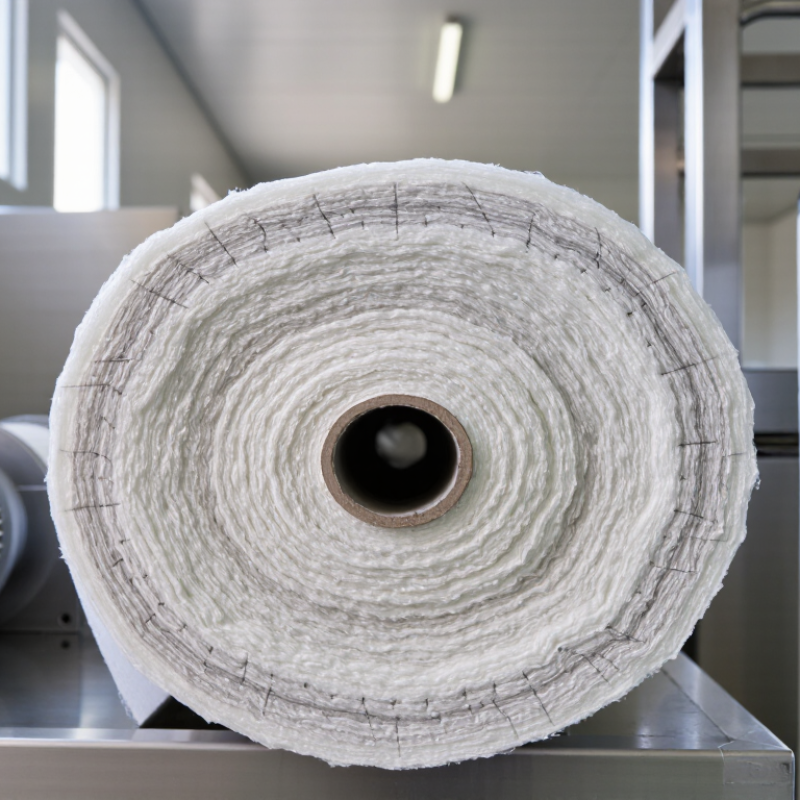
Filter nonwoven fabric is a sheet of fibers bonded together without weaving them into crossing yarns. The fibers may be joined by heat, pressure, mechanical entanglement, or a binder. Common materials include polypropylene, polyester, cellulose, and glass fiber. Each offers different properties, such as chemical resistance, strength, or moisture response.
Its tangled fiber network creates many small passages. Particles can collect on the surface or become trapped within the fabric, depending on its structure. Pore size, thickness, fiber diameter, and bonding method all affect filtration efficiency and airflow. No single construction fits every process.
Tips: Match the fabric to the fluid, particle size, operating temperature, and pressure. Check filtration ratings under relevant test conditions, not just the product label. A tighter structure may capture smaller particles, but it can also increase pressure drop. That trade-off matters.
In industrial systems, fabric selection should account for dust loading, cleaning method, and expected service life. For example, a dusty air stream may need a durable fabric that releases collected particles during cleaning. Liquid filtration may require different fiber compatibility and pore characteristics. Test samples under actual operating conditions when possible. It is easy to over-specify filtration; sometimes, the extra restriction causes problems. The best choice is the one that meets process needs reliably, not simply the finest-looking material.
Filter nonwoven fabric begins with fibers chosen for the job. Polyester often handles moisture and dimensional demands, while polypropylene suits many chemical environments. Fiber type, diameter, and length affect how easily air or liquid can pass through the finished sheet. Small choices matter.
In production, fibers are spread into a loose web. Carding combs fibers into a mostly aligned layer; air-laying distributes them more randomly. Wet-laid processes suspend fibers in water before forming a sheet. The web then needs bonding. Heat can soften selected fibers, while needle punching mechanically entangles them. Hydroentanglement uses fine water jets. Each method changes strength, thickness, and pore structure.
Next, manufacturers may calender the web between heated rollers to adjust its surface and thickness. A coating or other finish can add specific functions, but it may also reduce airflow. That trade-off is easy to underestimate. Operators check basis weight, tensile strength, thickness, and airflow; filtration efficiency may also be tested for the intended application. Results depend on the test method and operating conditions, so one measurement cannot describe every filter. Even a carefully controlled process can produce variation across a roll. That is why sampling from different areas matters.
Industrial filtration depends on more than a dense-looking surface. Filter nonwoven fabric uses entangled fibers to capture particles through interception, impaction, and diffusion. Fiber diameter, basis weight, and pore structure determine how easily air or liquid can pass. Smaller pores may improve particle capture, but they can also raise pressure drop. That trade-off matters.
In real plant testing, air permeability is a practical indicator of flow performance. A stable structure helps maintain airflow as dust accumulates. For liquid service, controlled pore size reduces unwanted particle migration. Thickness adds holding capacity, while sufficient tensile strength prevents stretching during installation and cleaning. The material also needs resistance to chemicals, heat, moisture, and abrasion. It must survive handling.
Reliable selection needs actual process data, not catalog assumptions. Measure particle size, temperature, viscosity, pressure, and cleaning frequency before choosing the fabric. Needle-punched, spunbond, and meltblown structures behave differently under load. Surface treatment can improve wetting or release, yet it may change permeability. No fabric is perfect. In my view, the weak point is often overlooked: a filter can perform well initially but fail after repeated cleaning. Pilot testing, microscopic inspection, and pressure-drop records reveal that gap. Some results remain uncertain, especially when dust changes during production. That uncertainty deserves attention.
Where Is Filter Nonwoven Fabric Used?
Filter nonwoven fabric serves both air and liquid filtration. In cement and mining plants, needle-punched media is commonly used in baghouses to capture dust from conveying, crushing, and kiln operations. The U.S. Geological Survey’s Mineral Commodity Summaries 2025 estimates global cement production at about 4.2 billion metric tons in 2024, illustrating the scale of dusty industrial processes. Similar fabrics are used in metalworking, power generation, and food processing, where filters help collect particles or protect downstream equipment.
Liquid-filter grades appear in paint lines, coolant systems, and water-treatment processes. Their fiber structure can be tailored for particle retention, flow rate, and operating conditions. Selection needs care: a tight pore structure may capture finer particles, but it can also raise pressure drop and shorten service life. A datasheet result is not the whole story; actual dust, moisture, and cleaning cycles can change performance. Test it onsite.
Tips: Match the fabric to the fluid, temperature, chemical exposure, and target particle size. Track pressure drop during operation, and inspect used media for uneven loading or damage. Small checks help. Keep a sample from each trial; it makes comparisons more useful, even when the first choice proves imperfect.
| Industrial Application | Typical Contaminants | Common Nonwoven Structure | Typical Basis Weight | Typical Air Permeability | Main Filtration Mechanism | Why Nonwoven Fabric Is Used |
|---|---|---|---|---|---|---|
| HVAC and air-conditioning filters | Dust, pollen, lint, and suspended particles | Spunbond or needled synthetic fiber; pleated composite media | 80–250 g/m² | Approx. 300–2,000 L/m²/s at 200 Pa | Interception, inertial impaction, and depth filtration | Low pressure drop, large filtration area, and easy pleating |
| Industrial dust collectors | Wood dust, mineral dust, cement dust, metal particles, and process powder | Needle-punched felt or spunbond membrane-laminated media | 300–600 g/m² | Approx. 50–300 L/m²/s at 200 Pa | Surface filtration and dust-cake formation | High tensile strength, abrasion resistance, and pulse-cleaning capability |
| Automotive engine and cabin air filtration | Road dust, soot, pollen, and fine airborne particles | Layered spunbond, meltblown, or composite pleated media | 100–300 g/m² | Approx. 200–1,500 L/m²/s at 200 Pa | Depth filtration and electrostatic attraction in selected media | Consistent pore structure, low weight, and suitability for pleated cartridges |
| Liquid prefiltration and process filtration | Sediment, rust, scale, fibers, and suspended solids | Spunbond or meltblown polypropylene depth media | 30–300 g/m² | Application-dependent; liquid flow is normally specified separately | Depth capture and graded pore filtration | Controlled fiber diameter, broad chemical compatibility, and high dirt-holding capacity |
| Water treatment and wastewater filtration | Algae, sludge particles, suspended solids, and biological flocs | Needle-punched polyester or polypropylene geotextile-type media | 200–1,000 g/m² | Approx. 20–200 L/m²/s at 200 Pa | Depth filtration and particle interception | Resistance to moisture, flexibility, and customizable thickness and permeability |
| Oil mist and coolant filtration | Oil aerosols, coolant mist, metal fines, and machining residues | Hydrophobic synthetic nonwoven or multilayer coalescing media | 100–400 g/m² | Approx. 100–1,000 L/m²/s at 200 Pa | Coalescence, interception, and depth capture | Good liquid retention, dimensional stability, and resistance to repeated airflow |
| Food, beverage, and pharmaceutical process air | Dust, product particles, microorganisms, and airborne contamination | Fine-fiber meltblown or multilayer synthetic nonwoven media | 20–150 g/m² | Approx. 50–800 L/m²/s at 200 Pa | Fine-particle interception and electrostatic attraction, where engineered | Uniform filtration, clean processing, and compatibility with disposable filter assemblies |
| Construction, mining, and abrasive-process filtration | Silica-containing dust, coal dust, aggregate particles, and abrasive fines | Heavy-duty needle-punched felt, often with a surface treatment | 400–800 g/m² | Approx. 30–180 L/m²/s at 200 Pa | Surface filtration, depth capture, and dust-cake retention | Strong mechanical performance, abrasion resistance, and suitability for demanding environments |
Note: The values shown are typical indicative ranges for industrial nonwoven filter media. Actual performance depends on fiber type, fiber diameter, thickness, finishing treatment, test method, air or liquid conditions, and filter construction.
Selecting the right filter nonwoven fabric begins with the process, not the fabric catalogue. In practice, the dust type, particle size, airflow, temperature, and moisture define the real requirements. Start with the target filtration efficiency and acceptable pressure drop. A dense web may capture fine particles effectively, yet it can restrict airflow quickly. Particle loading matters, too. For a dusty air stream, a graded or layered structure may extend service life.
Fiber chemistry must match the operating environment. Polypropylene suits many moisture-sensitive applications, while polyester often provides stronger heat resistance. Chemical exposure requires verified compatibility, not a guess based on fiber names. Check basis weight, thickness, tensile strength, and seam performance when the material faces vibration or repeated cleaning. Wet conditions can change pore structure. Real conditions matter.
I have seen laboratory samples perform well, then fail after installation. A clean test does not represent every production line. Test the fabric with actual dust, airflow, and cleaning cycles whenever possible. Measure pressure drop before and after loading. Review test methods, sampling details, and batch traceability from the supplier. Small omissions can distort the decision. A fabric may meet the specification but still feel impractical during maintenance. That weakness deserves attention before purchase. Reliable selection combines measured data, site experience, and a willingness to question attractive numbers.
Copyright © 2021 United Orthopedic Corporation All Rights Reserved.
Necessary cookies are absolutely essential for the website to function properly. This category only includes cookies that ensures basic functionalities and security features of the website. These cookies do not store any personal information.
Any cookies that may not be particularly necessary for the website to function and is used specifically to collect user personal data via analytics, ads, other embedded contents are termed as non-necessary cookies. It is mandatory to procure user consent prior to running these cookies on your website.