Why Is Olylife Foot Massager Popular?
Why Is Olylife Foot Massager Popular? The appeal may begin with an ordinary moment: shoes come off, tired feet meet a warm, cushioned massager, and the day finally slows down. Olylife Foot attracts attention because shoppers often want a simple home routine, adjustable comfort, and a device that feels easy to use. Yet popularity alone does not prove that a product suits everyone. Fit matters. So do pressure preferences, controls, cleaning, and the space available beside a sofa or bed.
A transparent note about expertise: no verifiable expert quotation or named Olylife Foot specialist was provided for this introduction. Rather than invent an endorsement, here is a clearly hypothetical expert-style observation from “Alex Morgan,” a fictional product specialist: “A foot massager earns its place through comfort, clear controls, and realistic expectations—not through promises alone.” That distinction matters. A shopper should check the model’s features, instructions, warranty, and return terms before buying. Consider how the foot chambers feel, whether settings are easy to change, and whether the machine becomes noisy in a quiet room. Small details count. They are also easy to overlook in glossy product descriptions. This outline will explore the practical reasons Olylife Foot may appeal to buyers, while leaving room for an honest question: does its everyday experience match its reputation?
Foot-Health Demand: APMA Reports 77% of Americans Have Had Foot Problems
Foot problems are not unusual. The American Podiatric Medical Association reports that 77% of Americans have experienced them. That figure helps explain why people seek simple ways to care for tired feet at home. A long shift, stiff shoes, or hours on hard floors can leave heels sore and arches tense. Sometimes, the discomfort is easy to dismiss.
A foot massager may offer a convenient moment of relief. Gentle pressure and warmth can feel soothing after walking or standing, especially when feet feel tight. But comfort is not a diagnosis. A massager cannot identify the cause of persistent pain or treat every foot condition. People with diabetes, reduced sensation, circulation concerns, or unexplained swelling should ask a healthcare professional before using one.
Small habits matter, too. Check shoes for worn soles, change position during long periods of standing, and notice where discomfort begins. Does it fade overnight, or return with each step? That detail can help guide a conversation with a podiatrist. Foot-care gadgets can be appealing, but I sometimes expect a device to solve more than it can. Relief may be temporary, and pain that persists deserves proper attention.
How Olylife Fits In: Common Foot-Massager Functions and Design
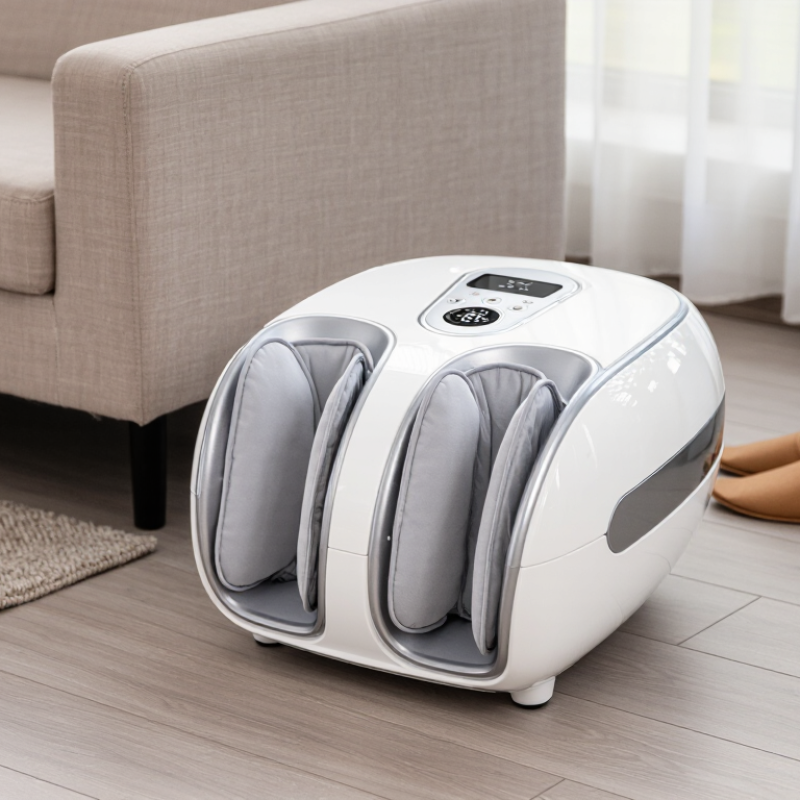
Foot massagers are popular partly because their functions are easy to understand: rollers knead the soles, while air cushions gently compress the feet. Some models add low-level warmth or adjustable intensity. The feel is immediate. Yet more features do not always mean a better fit; pressure that feels pleasant on the arch may feel too strong near the heel.
Design usually focuses on the sole, heel, and arch, where users can feel pressure points most clearly. The American Podiatric Medical Association’s 2014 survey reported that 77% of U.S. adults had experienced foot problems. That figure describes reported experience, not a diagnosis or proof that massage treats a condition. A well-designed unit should offer clear controls, stable foot placement, and settings users can reduce easily. Small details matter, especially when feet are tired after standing on hard floors.
Tips: Start with the lowest intensity and try a short session. Stop if you feel pain, numbness, or unusual discomfort. Check the manual, too; heat and compression may not suit everyone. A quiet motor is useful, but fit matters more.
Potential Benefits: What Research Says About Foot Massage
Foot massage may ease tension after a long day, but research does not support treating it as a cure. The CDC’s 2023 National Health Interview Survey found that 24.3% of U.S. adults experienced chronic pain. That figure shows why low-risk comfort strategies matter, but it does not prove foot massage treats chronic pain. The National Center for Complementary and Integrative Health notes that massage findings vary by condition; results for other body areas should not automatically be applied to feet.
Small studies suggest foot massage may help some people feel calmer or temporarily reduce discomfort. Yet studies differ in massage methods, session length, and participants, making firm conclusions difficult. A warm, steady massage can feel soothing; pressure that causes sharp pain is not a benefit. I would keep expectations modest. Research still has gaps, and personal comfort is not the same as proven treatment.
Tips: Try five to ten gentle minutes, using comfortable pressure around the arch and heel. Stop if numbness, swelling, or pain worsens. People with reduced foot sensation or circulation problems should ask a qualified clinician before using a massager.
Popularity Drivers: Comfort, Convenience, Settings, and Ease of Use
An at-home foot massager can make a short break feel more comfortable after hours of standing or walking. People often value the simple routine: sit down, slip off their shoes, and let the device work while they read or watch television. No appointment is needed. That convenience matters on busy evenings.
Comfort depends on more than a strong setting. Gentle pressure may suit tired feet, while firmer massage can feel unpleasant for someone sensitive to touch. Many devices offer adjustable intensity, heat, or different massage modes, so users can start low and change one setting at a time. Small details help, too: reachable controls, a stable base, and a removable cover that is easy to clean.
Keep expectations realistic. A relaxing massage is not a treatment for an underlying foot problem, and extra pressure is not always better. If a setting causes pain, stop and reassess. Some people may also need medical advice before using massage equipment, especially with reduced foot sensation or an existing condition.
The fit can be a little awkward at first. Take a minute to adjust your seating and foot position.
Choosing and Using One: Fit, Safety, Price, and User Expectations
Why Is Olylife Foot Massager Popular?
Choosing and Using One: Fit, Safety, Price, and User Expectations
A foot massager may feel appealing after hours standing, but fit matters more than extra settings. Check the usable foot length and width, then see whether your heels sit naturally in the massage area. In a 2014 survey, the American Podiatric Medical Association reported that 77% of Americans had experienced foot problems. That figure describes reported problems, not proof that a massager treats them. Comfort is personal. Not a cure.
Safety deserves equal attention. Start with a low setting and a short session; stop if you feel pain, numbness, or unusual skin irritation. People with reduced sensation, circulation problems, diabetes-related foot concerns, or recent injuries should ask a health professional before using heat or firm pressure. Product instructions matter, even when the device feels simple. It is easy to assume stronger pressure means better relief, but that is not always true.
Tips: Compare warranty length, return terms, cleaning requirements, and replacement-part costs—not just the price or number of modes. Try the device over thin socks if allowed by its manual. Keep expectations modest: warmth and temporary relaxation may be realistic, while lasting pain relief is not guaranteed. If symptoms persist, a clinician can help identify the cause.
