China Best Bone Reconstruction Surgery Manufacturers?
China’s bone reconstruction surgery sector is expanding alongside demand for trauma care, oncology reconstruction, and complex joint revision. However, “best” should never mean the lowest price. It should reflect clinical evidence, manufacturing consistency, traceability, surgeon support, and documented outcomes.
Recent reports indicate steady growth in the global bone grafts and substitutes market. Grand View Research estimated a multibillion-dollar market in 2023, with continued expansion through 2030. MarketsandMarkets also identified rising orthopedic trauma cases, an aging population, and regenerative technologies as important growth drivers. Estimates differ between reports. That matters. Market numbers should guide research, not replace verification.
Limb-reconstruction specialist Dror Paley often emphasizes a practical principle: “The goal is function.” This idea should shape any review of Chinese manufacturers. A reliable supplier should explain implant materials, sterilization controls, quality certificates, and clinical indications clearly. It should also provide evidence for products such as structural allografts, synthetic bone substitutes, fixation systems, and patient-specific implants.
The details are tangible. Inspect batch records. Review fatigue-test data. Check surface finishing under magnification. Ask how complaints are handled.
ISO 13485 certification is valuable, but certification alone proves limited clinical performance. Regulatory registration, surgeon feedback, published studies, and post-market surveillance deserve equal attention. Some manufacturers communicate impressive laboratory results while offering little independent clinical evidence. That weakness should be stated openly.
This guide will compare leading Chinese manufacturers through quality systems, product breadth, innovation, export experience, and clinical credibility. It will not declare a universal winner. Patient anatomy, surgical complexity, and hospital protocols remain decisive.
What Is Bone Reconstruction Surgery?
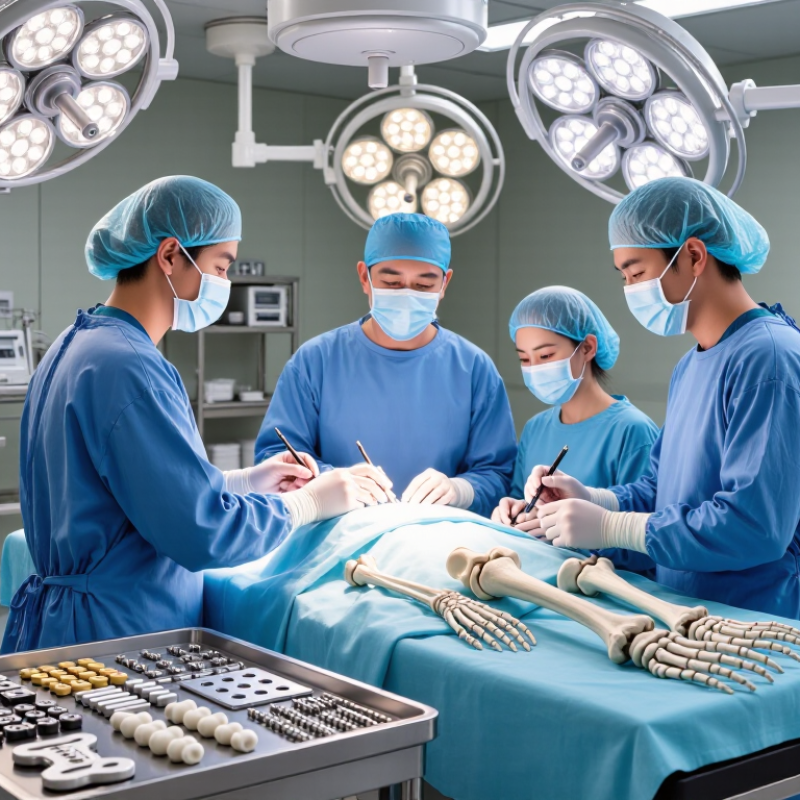
Bone reconstruction surgery repairs or rebuilds damaged bone when normal healing is unlikely. Surgeons may treat severe fractures, bone loss, infection-related defects, congenital differences, or tumors after removal. The procedure can use a patient’s own bone, donor tissue, or carefully selected synthetic materials. Each option has benefits, limits, and risks.
During planning, specialists review X-rays, CT scans, medical history, and blood supply around the injury. They consider bone size, mechanical load, infection risk, and the patient’s activity goals. In practice, small details matter. Poor soft-tissue coverage or unstable fixation can delay healing. The surgeon may shape a graft, secure it with plates or screws, and protect it while new bone grows. Recovery often includes wound checks, repeat imaging, nutrition guidance, and controlled physiotherapy. Healing takes time.
Results are not guaranteed. Smoking, diabetes, infection, and limited blood flow can interfere with bone union. Patients should ask how the graft was sourced, how devices are tested, and what follow-up is available. A reliable surgical team explains alternatives clearly and documents risks honestly. “Best” is not universal. It depends on anatomy, diagnosis, surgical experience, and dependable postoperative care. Even experienced teams may revise the plan after seeing the actual defect. That uncertainty deserves respect.
China Best Bone Reconstruction Surgery Manufacturers? — What Is Bone Reconstruction Surgery?
Bone reconstruction surgery restores bone structure and function after trauma, infection, tumor removal, congenital deformity, or severe bone loss. The chart shows commonly described healing phases and their typical time ranges; actual recovery depends on the procedure, bone involved, patient health, and biological factors.
How to read the chart: The inflammatory phase usually occurs during the first two weeks, the reparative phase commonly develops over approximately two to six weeks, and remodeling may continue for several months or longer.
Key Applications of Bone Reconstruction Implants
China Best Bone Reconstruction Surgery Manufacturers?
Bone reconstruction implants support repair after fractures, tumor removal, infection-related bone loss, and revision surgery. Their role changes with the defect’s size, location, and mechanical demands. A small facial defect may need a contour-matched implant, while a damaged femur requires strong fixation and long-term stability.
Spinal reconstruction uses cages, screws, plates, and graft-supporting structures to restore alignment and encourage fusion. In dental and maxillofacial procedures, implants can rebuild jaw volume before tooth replacement or repair trauma-related gaps. Custom titanium or polymer implants may fit complex anatomy more precisely, especially when CT-based planning is available. The fit must be checked carefully.
Manufacturers should provide consistent material quality, traceable production, accurate imaging data, and clear surgical guidance. Porous surfaces can encourage bone ingrowth, but pore design must balance strength and biological response. Resorbable materials may reduce long-term foreign material, although their strength can decline before healing is complete.
This is a difficult trade-off.
Surgeons also assess infection risk, soft-tissue coverage, patient age, bone density, and expected activity. A technically advanced implant cannot replace sound clinical judgment. Some preoperative plans appear perfect on a screen, yet anatomy during surgery may differ. That gap deserves honest discussion.
Leading Bone Reconstruction Surgery Manufacturers in China
Leading Bone Reconstruction Surgery Manufacturers in China
China’s bone reconstruction sector is expanding with hospital demand, aging populations, and trauma care needs. Grand View Research estimated the global orthopedic implants market at over USD 47 billion in 2023. This growth increases interest in Chinese manufacturers producing fixation systems, bone graft substitutes, and customized implants. Strong suppliers should demonstrate verified clinical experience, stable production, and clear technical documentation.
Look beyond factory scale. A credible manufacturer can provide material certificates, sterilization records, fatigue-test results, and batch traceability. These details matter during a real operation, when a plate must fit a curved tibia and screws must hold firm bone. The China National Medical Products Administration requires applicable medical devices to meet registration and quality-control requirements. Buyers should also review ISO 13485 certification and relevant biocompatibility evidence.
Clinical support remains essential. Fortune Business Insights valued the global bone graft substitutes market at approximately USD 3 billion in 2023, reflecting continuing demand for reliable reconstruction materials. However, market size does not prove surgical performance. That is the difficult part. Hospital evaluations, surgeon feedback, revision rates, and delivery consistency deserve equal attention. Some manufacturers communicate well before an order but respond slowly after implantation. That weakness should not be ignored. A careful comparison should examine design support, customization limits, packaging integrity, complaint handling, and long-term supply capacity, not only the quoted price.
How to Evaluate Chinese Bone Reconstruction Manufacturers
China Best Bone Reconstruction Surgery Manufacturers?
How to Evaluate Chinese Bone Reconstruction Manufacturers
Evaluating a Chinese bone reconstruction manufacturer requires more than comparing prices or viewing a modern factory. Request current quality certificates, production records, and evidence of regulatory registration for each product. Check whether the quality system follows ISO 13485 and whether relevant approvals match the destination market. A certificate alone is not enough. Verify its scope, expiry date, and issuing body.
Ask how the manufacturer controls titanium, polymer, or ceramic materials from receiving inspection to final packaging. Look for batch numbers, inspection reports, sterilization validation, and clear product traceability. Mechanical tests should reflect real clinical use, including fatigue, compression, and fixation performance. Biocompatibility data must cover the finished device, not only its raw materials. Ask why.
Experienced suppliers should explain design changes, complaint handling, and corrective actions without avoiding difficult questions. Request anonymized clinical feedback, surgeon evaluations, and post-market surveillance records where legally available. A factory tour can reveal clean production areas, but it cannot replace document review and independent auditing. Check the details. I would not pretend every published case proves long-term success; follow-up periods may be short, and evidence can be uneven. Before cooperation, assess communication speed, technical support, sample consistency, and the manufacturer’s ability to maintain supply during customization. A small pilot order and third-party testing may expose problems earlier than a large contract.
Technologies, Quality Standards, and Export Capabilities
China’s bone reconstruction surgery manufacturers are increasingly assessed through technology, quality systems, and export discipline. The World Health Organization estimates that 1.71 billion people live with musculoskeletal conditions worldwide. This demand requires more than CNC machining. It requires patient-specific planning, porous structures, additive manufacturing, and controlled surface treatments. CT-based design can improve anatomical matching, but clinical validation remains essential. A precise implant is not automatically a successful implant.
Quality should be visible in documents and factory records.
ISO 13485 supports risk-based medical device quality management, while ISO 10993 guides biological safety evaluation. Manufacturers should provide material certificates, batch traceability, sterilization validation, and fatigue-testing results. ASTM testing methods can assess implant strength and wear. Small details matter. A missing lot record can weaken confidence.
Export capability also depends on regulatory readiness. Manufacturers should maintain technical files, multilingual instructions, packaging validation, and post-market surveillance procedures. WHO data shows the global burden is large, yet market access differs sharply by country.
Customs classification, device registration, and importer requirements must be checked before shipment. A recent industry review may highlight rapid growth in orthopedic implants, but forecasts are not clinical evidence.
In my view, some supplier evaluations still overvalue price and production speed. That is a weakness worth correcting. Reliable partners explain limitations, share test methods, and respond clearly when results are imperfect.