China Top Hip Implant Design Manufacturers for Buyers

Choosing a hip implant design partner in China requires more than comparing product catalogs or factory locations. Buyers need to understand how a manufacturer translates clinical requirements into geometry, materials, and production controls. A femoral stem’s taper, a cup’s locking features, and the fit of a liner can affect surgical handling and long-term performance. Small details matter.

This guide examines factors buyers can use to assess manufacturers, including engineering capabilities, design verification, material traceability, manufacturing consistency, and technical support. Ask how teams document design changes and evaluate fatigue, wear, and dimensional tolerances. Request relevant test summaries and quality-system documentation, then confirm that each applies to the product under review. Claims deserve evidence. A polished catalog is not enough.

The right supplier depends on the intended market, device class, product scope, and level of customization. Some buyers may need a complete implant system; others may seek design collaboration or contract manufacturing. Compare communication practices, sample timelines, tooling plans, and after-sales responsiveness alongside technical specifications. A low quotation can hide gaps in documentation or support. That is worth checking.

No single checklist can replace an independent technical and regulatory review. Information available online may also be incomplete or outdated. Use this overview to prepare focused questions, verify current credentials directly, and identify where further assessment is needed. Careful evaluation makes hip implant design partnerships easier to compare, while keeping patient safety and reliable evidence at the center.
China Top Hip Implant Design Manufacturers for Buyers

Understanding Hip Implant Design and Its Core Components

China Top Hip Implant Design Manufacturers for Buyers
Understanding Hip Implant Design and Its Core Components

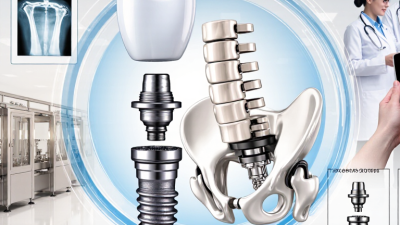
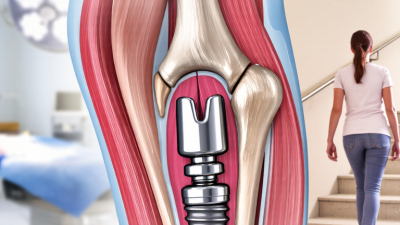
A hip implant works as a linked system, not a single part. In a typical total hip replacement, a metal stem sits inside the femur, while a ball moves within a cup placed in the pelvis. The cup’s liner forms the bearing surface. Small changes in head size, neck angle, or stem shape can affect stability, range of motion, and how force travels through bone. Fit matters. So does the patient’s bone quality.

The 2023 American Joint Replacement Registry Annual Report covered more than 3 million hip and knee procedures reported through 2022. Registry data helps buyers understand real-world use and revision patterns, but it does not prove that one design suits every patient. Compare material combinations, fixation methods, and published follow-up data. Cemented and cementless stems behave differently, and implant selection remains a clinical decision. A polished drawing alone tells too little.

Tips: Ask for component dimensions, material specifications, and evidence supporting claimed performance. Check whether testing reflects the intended bearing pair and loading conditions. One detail is easy to miss: a design that looks precise on paper may still fit poorly across varied anatomy.

How Chinese Manufacturers Develop and Produce Hip Implants

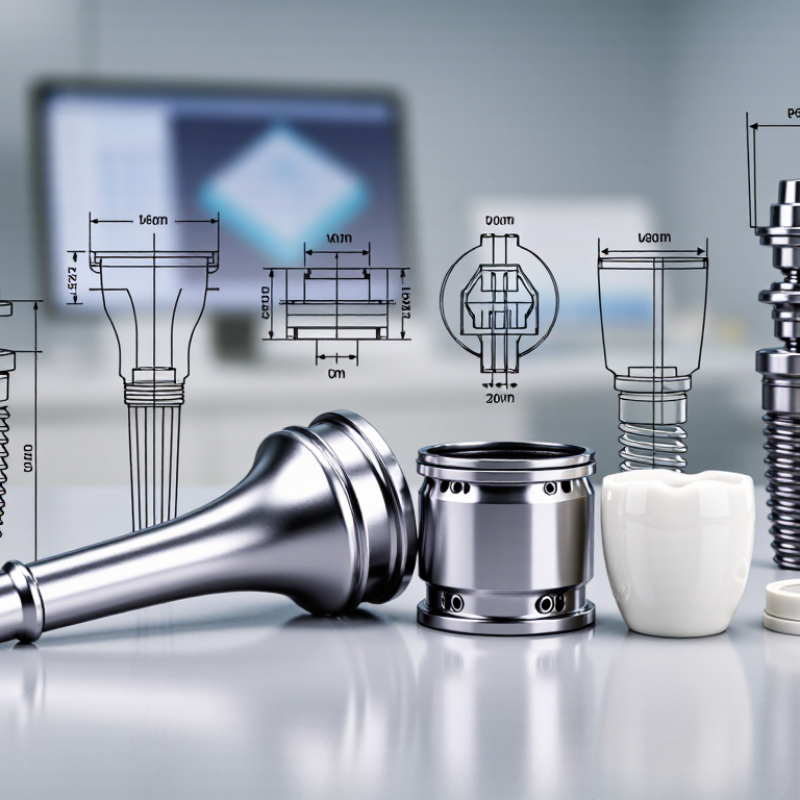
Chinese hip implant development usually starts with anatomy, intended use, and material selection. Engineers model the stem and cup in CAD, then review fit, load transfer, and surgical handling. Production may involve forging or machining titanium alloy, polishing bearing surfaces, and applying porous coatings for bone integration. Each step needs documented process controls. Small details matter.

The GBD 2019 study, published in The Lancet Rheumatology, estimated that 528 million people lived with osteoarthritis worldwide in 2019. This is not a forecast of implant demand, but it shows the scale of joint disease. Manufacturers therefore need to validate fatigue strength, wear, corrosion resistance, and dimensional consistency—not just produce a convincing prototype. Inspection records and traceability also help buyers assess how consistently a design is made. A limitation remains: laboratory tests cannot fully reproduce varied patient anatomy or years of real-world use.

Tips: Ask for test methods, sample sizes, material certificates, and process-control records. Compare evidence across product versions, not only the latest brochure. A neat drawing proves little.

Key Criteria for Assessing Chinese Hip Implant Manufacturers

China Top Hip Implant Design Manufacturers for Buyers

Key Criteria for Assessing Chinese Hip Implant Manufacturers

Assess a manufacturer by evidence, not catalog claims. Ask for design specifications, material certificates, sterilization records, and batch-level traceability. For a cementless stem, inspect how the porous coating is characterized and how fatigue testing reflects expected loading. Request the test method, sample size, and full results. A polished summary alone is not enough.

Clinical follow-up matters. The American Academy of Orthopaedic Surgeons’ 2024 American Joint Replacement Registry Annual Report covers nearly 4.8 million hip and knee procedures. That scale shows why registry-quality data is valuable, but it does not validate every implant or manufacturer. Ask whether a supplier tracks revisions, complications, and implant identifiers over time, and how it handles missing follow-up. Some data may be incomplete; that should be stated plainly.

Check whether quality systems and regulatory documents match the intended market, product, and manufacturing site. Review design-change controls, supplier audits, complaint handling, and consistency between approved specifications and shipped devices. Visit the production line if possible. Look closely at machining records, surface finishing, and packaging integrity. Price matters, but a low quote means little without reliable performance evidence and clear post-market monitoring. One uncomfortable question is useful: can the manufacturer explain a product failure without hiding behind general assurances?

China Top Hip Implant Design Manufacturers for Buyers - Key Criteria for Assessing Chinese Hip Implant Manufacturers

Assessment dimension What buyers should verify Relevant evidence or reference Practical assessment approach
Regulatory authorization Confirm the exact hip implant model, intended use, manufacturing site, and legal manufacturer match the applicable market authorization. Implantable hip prostheses are generally regulated as high-risk devices; confirm the classification and requirements for the specific product and market. For China, check applicable National Medical Products Administration (NMPA) registration requirements and product records. For export markets, verify the relevant local authorization, such as EU Medical Device Regulation (EU) 2017/745 requirements where applicable. Request current certificates or registration documents and verify their scope, validity, product model, and manufacturing address with the issuing authority or official database where available.
Quality management system Assess controls for design changes, supplier approval, nonconforming products, corrective actions, production records, and traceability. ISO 13485 specifies quality management system requirements for medical devices. Certification alone does not establish that a particular implant is clinically suitable or authorized in a target market. Check the certificate’s scope, sites, and expiry date; review audit findings and corrective-action records where access is available.
Design verification and mechanical performance Review the test plan and results for the specific implant design, including the applicable components, worst-case sizes, acceptance criteria, and design changes since testing. ISO 21535 covers requirements for non-active surgical implants used for joint replacement. Relevant parts of the ISO 7206 series address mechanical testing of hip-joint prostheses, including stem fatigue and the endurance of the head-and-neck region. Request complete or suitably redacted test reports from qualified laboratories, with sample identification, methods, results, and any deviations documented.
Materials and biological safety Confirm the material grade and specification for each component, material supplier controls, batch traceability, and the biological evaluation applicable to the finished device and its contact characteristics. The ISO 10993 series provides a framework for biological evaluation of medical devices. The evaluation should be risk-based and appropriate to the materials, processing, and patient contact involved. Compare material certificates and incoming inspection records with the device specification; check that biological evaluation reports address the marketed configuration.
Manufacturing and process control Evaluate controls for machining, surface finishing or coating where applicable, cleaning, inspection, equipment maintenance, and outsourced processes. Relevant evidence includes validated process documentation, inspection methods, calibration records, process-change controls, and lot-level manufacturing records. Conduct a quality audit or request a process map and sample batch records. Confirm that critical suppliers and outsourced operations are included in the quality system.
Sterilization and sterile packaging For products supplied sterile, verify the sterilization method, validated cycle, routine monitoring, packaging integrity, and labeled shelf life. For non-sterile products, confirm the stated supply condition and required processing instructions. Applicable standards depend on the chosen method and may include ISO 11135 for ethylene oxide, ISO 11137 for radiation, ISO 17665 for moist heat, and ISO 11607 for packaging of terminally sterilized medical devices. Request validation summaries, routine release records, packaging validation evidence, and shelf-life support for the exact product configuration.
Clinical evidence and post-market monitoring Review evidence supporting the intended use and patient population, plus procedures for complaint handling, vigilance reporting, recalls, and ongoing safety monitoring. Evidence requirements vary by jurisdiction and device. Relevant records may include clinical evaluation documentation, post-market surveillance plans, and safety or performance follow-up where required. Assess whether the evidence applies to the same design and materials; ask how serious complaints and field safety actions are investigated and communicated.
Traceability and supply continuity Determine whether each implant can be traced to its production lot and, where applicable, serial number, material batches, sterilization records, and distribution history. Device identification and traceability requirements depend on the destination market and device status. Request the applicable labeling and record-retention procedures. Use a sample label and traceability exercise to confirm records can link the finished device to key production and release information.
Technical documentation and buyer support Check the completeness and consistency of specifications, drawings, instructions for use, implant and instrument compatibility information, and change-notification commitments. Documentation should correspond to the authorized product version and be available in the languages and formats required for the destination market. Compare product codes across labels, certificates, instructions, and test reports. Agree in writing on document access, notification of changes, and complaint-response channels.

Note: Standards and regulatory requirements may be revised and vary by market. Buyers should verify current requirements for the specific product and destination country before purchase.

Leading Chinese Manufacturers and Their Design Capabilities

Chinese hip implant manufacturers offer a range of design capabilities, from conventional stem geometry to porous surfaces intended to support bone integration. Many teams use computer-aided design and finite element analysis to assess fit, stress distribution, and component interfaces. These tools inform development; they do not replace physical testing or clinical evaluation. Material selection, such as titanium alloys or cobalt-chromium alloys, also affects weight, strength, and manufacturing needs. Details matter. A small change in neck angle can influence fit and range of motion.

Tips: Ask for drawings, material specifications, and test summaries. Check how the manufacturer controls dimensions between production batches. Request clear explanations of surface treatment and modular connections. Good answers should be specific, not just polished.

Buyers should also assess whether a design can be adapted to different anatomy without making the component range unnecessarily complex. Ask how prototypes are reviewed and how design changes are documented. Independent testing and traceable quality records can help buyers judge the evidence behind a design. Some product pages provide little technical detail, and that is worth noticing. A capable engineering team may still need time to address a buyer’s requirements; timelines and trade-offs should be discussed plainly.

How Buyers Can Compare Suppliers and Verify Product Quality

China Top Hip Implant Design Manufacturers for Buyers

Comparing hip implant design suppliers requires more than reviewing catalogues and quoted prices. Ask which design tasks the supplier performs in-house, and which are outsourced. Request the current quality-system certificate and confirm its scope covers the relevant activities. A certificate alone proves little about a specific implant.

Review design inputs, risk assessments, verification results, and documented design changes. Look for evidence tied to the exact model and materials under consideration. Fatigue, wear, and biocompatibility testing should have clear methods, acceptance criteria, and traceable reports. Check whether test samples match the proposed production design. Details matter. A polished report can still leave gaps.

For production quality, ask how materials, machining steps, and finished lots are identified and traced. Examine inspection records, nonconformance handling, and supplier change-control procedures. If possible, arrange a qualified audit and compare records with what staff actually do on the factory floor. Product approvals vary by destination market, so verify the relevant documentation independently. No single check settles the question; even a careful review can miss something. Keep a written comparison, flag unresolved evidence, and avoid treating low price or confident sales claims as proof of quality.

Scroll to Top