What Are the Top Orthopedic Surgical Techniques?
Orthopedic surgery has no single “best” technique; the right approach depends on the injury, the patient’s health, and the goals of treatment. A small camera can guide arthroscopy through narrow portals near a joint. A replacement operation may instead involve reshaping bone and fitting metal or ceramic components. For fractures, plates, screws, or rods can hold bone fragments steady while healing begins. Each method solves a different problem.
Dr. Frank Jobe, who developed the operation later known as Tommy John surgery, is often associated with the line, “I didn’t invent Tommy John surgery; Tommy John did.” It points to an important truth: techniques evolve through close attention to patients, not machinery alone. The phrase is memorable, but it does not explain every surgical decision.
This guide examines arthroscopy, joint replacement, fracture fixation, ligament reconstruction, and newer robotic-assisted approaches. It compares what each technique can address, how surgeons plan the procedure, and what recovery may involve. A surgeon might review an MRI, discuss daily activities, and explain risks before recommending an operation. Small details matter.
New technology can improve precision, but it does not guarantee better results for every patient. Evidence, surgical experience, and the person’s needs all count. Even a well-established technique has limits. The aim here is a clear overview, not a promise that surgery is always necessary or right for everyone.
How Surgeons Choose Among Arthroscopy, Fracture Fixation, Arthroplasty, and Fusion
What Are the Top Orthopedic Surgical Techniques?
How Surgeons Choose Among Arthroscopy, Fracture Fixation, Arthroplasty, and Fusion
Choosing an orthopedic procedure starts with the problem, not the name of a technique. Surgeons consider pain, movement, imaging, bone quality, overall health, and the patient’s daily goals. Arthroscopy uses a small camera and instruments through small openings, often to treat selected problems inside a joint. It is not suitable for every source of pain. No method fits everyone.
For a fracture, fixation with screws, plates, or rods may hold the bone in alignment while it heals. Arthroplasty replaces damaged joint surfaces when pain and stiffness substantially limit function. Fusion joins bones to reduce painful movement, often when a joint is severely damaged or unstable. A surgeon weighs likely benefits, risks, recovery demands, and alternatives. A scan may show damage, but it cannot describe how a sore knee feels on stairs or how much motion matters at work. The decision can be less tidy than a list of procedures suggests.
Tips: Ask what the operation aims to improve, what recovery may involve, and what could happen without surgery. Share specific goals, such as walking to the mailbox or gripping a mug. If the options remain unclear, ask for another explanation before deciding.
What Are the Top Orthopedic Surgical Techniques?
How surgeons choose among arthroscopy, fracture fixation, arthroplasty, and fusion
How to read this: A value of 1 marks a technique’s defining primary role; 0 means it is not the defining role. Arthroscopy uses a small camera to access a joint, fixation stabilizes a broken bone, arthroplasty replaces joint surfaces, and fusion joins bones to limit motion. Actual treatment choices depend on the diagnosis, anatomy, and individual patient factors.
Arthroscopy: Camera-Guided Diagnosis and Repair Through Small Incisions
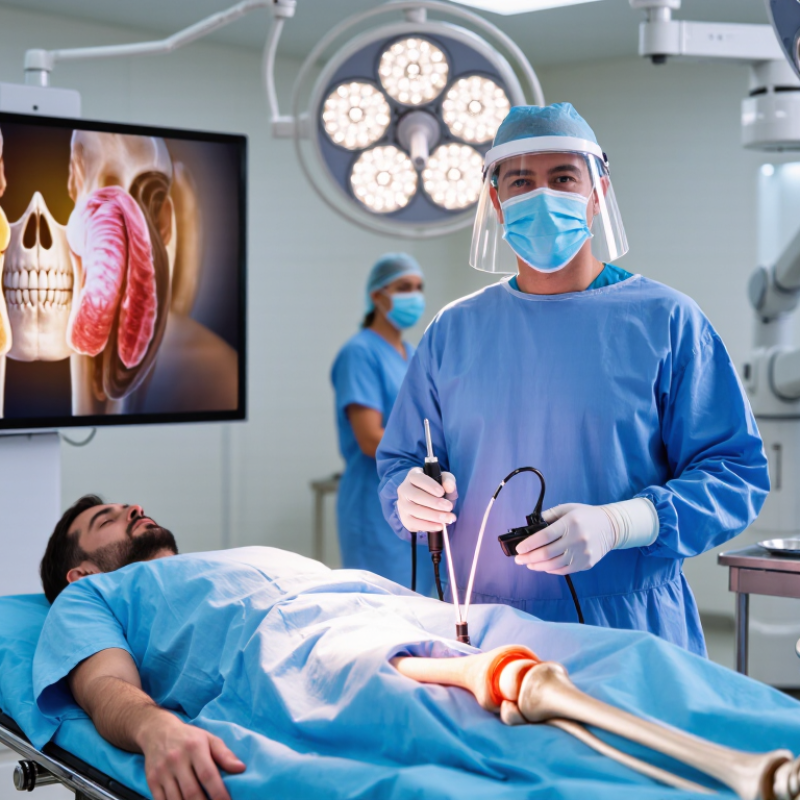
Arthroscopy uses a small camera and slender instruments passed through tiny incisions, or portals, near a joint. On a monitor, the surgeon can inspect cartilage, ligaments, and the joint lining, then treat selected problems during the same procedure. In a knee operation, for example, the camera may reveal a torn meniscus while saline gently expands the joint. The view is detailed, but it is not the whole story: imaging, symptoms, and examination still guide decisions.
Arthroscopy may help address certain repairable injuries, but it is not automatically the best choice for joint pain. A BMJ clinical practice guideline on degenerative knee disease reported that fewer than 15% of patients experienced a small or very small short-term improvement after arthroscopy; that benefit was not sustained at one year. Those findings do not apply to every injury or joint. Ask what specific tissue will be treated, what alternatives exist, and what recovery may involve.
Tips: Ask your surgeon to explain the planned repair and realistic goals. Follow wound-care and rehabilitation instructions. Small incisions still need care. Recovery varies, and I would not assume that a quicker-looking procedure means a quick return to sport.
Joint Replacement: Registry Studies Estimate 82% Knee Implant Survival at 25 Years
Joint replacement is one of orthopedics’ most established surgical techniques. Registry studies estimate that about 82% of knee implants remain unrevised at 25 years. That is substantial. But it is not a promise for any individual patient.
“Survival” usually means the implant has not been revised, rather than that the knee feels perfect or works without discomfort. Registry estimates draw on many patients treated in routine practice, which makes them useful for understanding long-term patterns. Still, definitions and follow-up methods can differ. Some patients may also move away or become harder to track.
The operation involves more than fitting artificial surfaces. Surgeons assess bone, balance surrounding ligaments, and position components to support stable movement. Small differences in alignment can matter. Age, activity, health, and the reason for surgery may also influence how long an implant lasts. Recovery matters too: a patient gradually rebuilding strength may experience the joint differently from someone expecting immediate ease.
That part is easy to underestimate.
The 82% figure offers a helpful population-level reference, not a personal forecast. Patients can ask their orthopedic team how registry results apply to their circumstances and what outcomes the estimate actually measures.
Spinal Decompression and Fusion: Relieving Nerve Pressure and Stabilizing the Spine
Spinal decompression is designed to reduce pressure on nerves, often caused by a narrowed spinal canal or a bulging disc. Pressure can bring pain, tingling, numbness, or weakness that travels into an arm or leg. The exact operation depends on where the nerve is crowded and what is causing it. A surgeon may remove a small amount of bone or disc tissue to create more room. Imaging helps, but symptoms and examination findings matter too. One detail patients sometimes overlook: relieving pressure does not guarantee every symptom will disappear. That matters.
Fusion may be added when a spinal segment is unstable or when decompression could make it less stable. During fusion, a surgeon joins neighboring vertebrae, often using bone graft and fixation devices, so they can grow together over time. The aim is stability, not extra flexibility. Fusion may ease pain linked to movement at that level, but it also limits motion there and carries risks such as infection, persistent symptoms, or failure of the bones to unite. The trade-off is real and deserves a plain discussion. Recovery varies; walking may begin early, while lifting and twisting are restricted as healing progresses. Ask how the proposed procedure fits your symptoms, health, and scan findings.